Should Kids Get Paid for Chores? Allowance vs. Rewards

Should kids get paid for chores, or should helping around the house simply be expected? Families have debated that question for generations, and there is no single rule that works for every household.
Paying for chores can help children connect work with earning and give them real money to practice managing. Unpaid chores can teach that everyone contributes to family life. Stars, privileges, and custom rewards can motivate children without turning every responsibility into a transaction. The best system is the one whose lesson matches your family's goal.
Quick answer
Kids can benefit from getting paid for some chores, especially when the money gives them a chance to practice saving, spending, and setting goals. However, children should also learn that some household responsibilities come with being part of a family. Many households use a hybrid approach: basic personal and shared chores are expected, while optional jobs or larger projects earn money.
Three common approaches to chores and allowance
Most family systems fall into one of three models. None is automatically right or wrong, but each teaches a different lesson.
Approach | Main lesson | Works well when | Possible drawback |
|---|---|---|---|
Pay for chores | Work creates earnings | You want hands-on money practice | Children may expect payment for every contribution |
Keep chores and allowance separate | Family members contribute, and money practice is its own lesson | You want chores to remain a shared obligation | The connection between work and earning is less direct |
Use a hybrid system | Some work is expected; extra work can earn rewards | You want to teach both contribution and earning | The boundary between expected and paid work must be clear |
Option 1: pay kids for completed chores
In a direct-pay system, each chore or completed week has a value. A child might earn a set weekly allowance after finishing required jobs, or each job might have its own amount.
This approach makes the work-and-money relationship easy to see. It also creates regular opportunities to discuss what happens after money is earned.
Benefits of paying kids for chores
Earning becomes concrete. Children see that money is connected to effort and follow-through.
Money decisions become real. Saving for a goal feels different when the child earned the money.
Parents can teach budgeting. A small, predictable income gives children something to divide among saving, spending, and sharing.
Extra effort has a clear path. Optional jobs can help children work toward larger purchases.
The American Academy of Pediatrics notes that chores can be one way children earn allowance. Its guidance emphasizes helping children make earnings meaningful by giving them responsibility for saving, spending, or paying for some age-appropriate wants.
Potential problems with direct payment
A child may decide the reward is not worth the work. That creates an awkward question: can they simply decline to take out the trash because they do not need the money this week?
Paying for every small contribution can also turn ordinary family cooperation into a negotiation. If this model fits your household, define a core set of non-negotiable responsibilities or make it clear that allowance depends on the complete weekly agreement, not a menu of optional tasks.
Option 2: keep allowance separate from chores
Some parents give a regular allowance for money practice while treating chores as an expected part of family membership. In this model, a child receives money on schedule and still has household responsibilities.
The central message is simple: everyone who lives in the home helps care for it. Allowance exists so children can learn to manage money, not as wages for clearing their own plate or putting personal belongings away.
Benefits of separating allowance and chores
Children cannot opt out of basic responsibilities by giving up payment.
Family contribution is not measured only in dollars.
Allowance stays predictable enough for saving and budgeting practice.
Parents can use natural or privilege-based consequences when chores are skipped.
What this approach still needs
A regular allowance does not teach financial skills by itself. The Consumer Financial Protection Bureau summarizes research suggesting that allowance is most useful when parents also provide guidance about budgeting, saving, and spending.
Without conversation and age-appropriate decisions, allowance can become money that appears automatically. Children need opportunities to plan, make tradeoffs, experience small mistakes, and try again.
Option 3: use a hybrid chore reward system
A hybrid system separates expected responsibilities from optional earning opportunities. It is popular because it teaches two ideas at once:
Everyone contributes to the household.
Extra work can create extra earnings.
For example, a child might be expected to make the bed, clear their plate, and take a weekly turn unloading the dishwasher. They could earn money or bonus points for washing the car, organizing the garage, doing additional yard work, or tackling another job beyond the ordinary routine.
Sample hybrid chore list
Expected family responsibility | Optional earning job |
|---|---|
Put personal laundry in the hamper | Wash and fold a household load |
Clear your plate after dinner | Clean the entire kitchen after a family meal |
Keep bedroom pathways clear | Vacuum and dust shared rooms |
Feed the pet on your assigned day | Wash, groom, or deep-clean the pet area |
Take a turn with weekly trash | Help clean the garage or storage area |
The distinction should depend on your household, not somebody else's chart. A job that counts as an extra project for a seven-year-old may be an ordinary responsibility for a teenager.
What about stars, points, and privileges?
Money is only one kind of reward. Some children are more motivated by visible progress, time with a parent, choosing a family activity, or earning a privilege.
Non-cash rewards can include:
Stars toward choosing the family movie.
Points toward a later bedtime on the weekend.
Choosing dinner or dessert.
One-on-one time for a favorite activity.
Extra time for a hobby, game, or outing.
A custom reward selected together.
The American Academy of Child and Adolescent Psychiatry recommends clear expectations, regular routines, consistency, positive feedback, and reward systems with specific goals. Whatever reward you choose, the system should make the goal and progress easy to understand.
How much allowance should you pay for chores?
There is no correct national rate. The right amount depends on your budget, the child's age, what the money is meant to cover, and the amount of work involved.
Start by answering four questions:
What will the child pay for? A child responsible for snacks with friends needs a different amount from one saving only for toys.
How often will payment happen? Younger children may connect weekly payments to work more easily than monthly payments.
Is payment all-or-nothing? Decide whether partial completion earns partial allowance or whether certain chores are required.
Can your budget sustain it? A modest amount paid consistently is better than a generous promise that changes each week.
Some families use a simple age-based weekly amount. Others assign values to individual paid jobs. Either can work when the rule is understandable and consistent.
For example amounts and a clear spending agreement, see our guide to how much allowance kids should get by age.
When should kids start earning allowance?
A child may be ready when they understand that money can be saved and exchanged, can complete a few simple responsibilities, and can make basic choices between spending now and waiting.
For many families, that happens during the early elementary years. Younger children often respond well to coins, small amounts, and short savings goals. Older children can manage categories, longer goals, and more responsibility for their own purchases.
Readiness matters more than choosing the perfect birthday. Start with a simple system and teach one money skill at a time.
How to set up chores and allowance without arguments
Choose the lesson first
Are you trying to teach household contribution, work and earning, money management, consistent routines, or some combination? Your goal should determine the system.
Write down what is expected and what is paid
Children should not discover after finishing a chore that it did not qualify. Keep expected responsibilities and earning jobs visible, with clear values and deadlines.
Define what complete means
Replace "clean the bathroom" with a checklist that names the sink, mirror, counter, toilet, towels, and floor. Clear finish lines reduce disagreements about effort and quality.
Review work at a consistent time
Pick a predictable daily or weekly moment to approve chores and update balances. If a child completes the work but waits days for acknowledgment, the connection between effort and outcome gets weaker.
Talk about the money after it is earned
The CFPB's Money as You Grow guidance says an important part of allowance is talking with children about their plans for it. Ask what they want to spend, save, or share, and let small decisions create low-risk lessons.
For a step-by-step setup, see our guide to building a chore reward system that works.
How Xtra Hands supports different family approaches
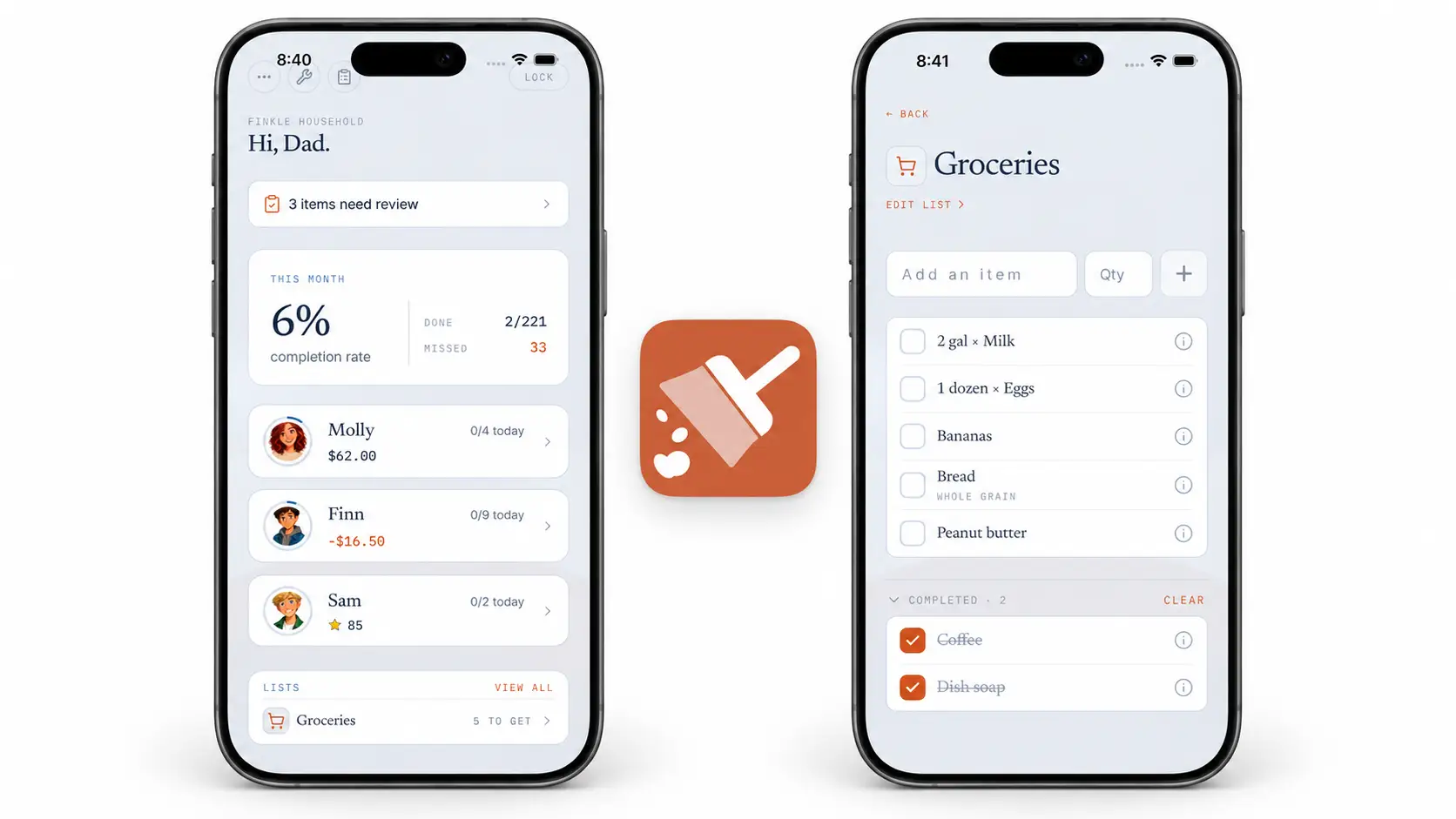
Xtra Hands does not require every household member or chore to use the same reward. Families can track money, use stars and custom rewards, or assign responsibilities without turning each one into a paid job.
Parents can organize recurring and rotating work, review completed chores, and use photo proof when a task needs verification. That makes it possible to run a direct-pay, separate, or hybrid system without keeping multiple charts and balances by hand.
For a broader look at your options, compare the best chore apps for families in 2026. Families with older children can also use our list of 30 age-appropriate chores for teenagers to choose useful responsibilities.
Frequently asked questions
Is paying kids for chores a good idea?
It can be. Payment creates a practical way to teach earning, saving, spending, and goal setting. It works best when parents also discuss money decisions and make clear whether any responsibilities are expected without payment.
Should children lose allowance for unfinished chores?
That depends on the agreement. If allowance is explicitly earned through chores, partial or missed payment may be a logical result. If allowance is separate and intended for money practice, use a different consequence for unfinished responsibilities.
Should kids get paid for good grades?
Grades involve ability, support, effort, and circumstances that are not always captured by one result. Some families reward specific study habits or improvement instead of paying for letter grades. Keep the focus on behaviors the child can control.
Should kids get paid for cleaning their room?
Many families treat basic care of personal space as an unpaid responsibility. A larger project, such as reorganizing storage or deep-cleaning another room, could be an optional paid job.
Can siblings have different chore rewards?
Yes. Chores and rewards can reflect age, ability, time, and responsibility. Explain the principles openly so different does not feel arbitrary.
Final take
Kids do not have to be paid for every chore, and allowance does not have to be separated from work. The important part is choosing the lesson you want the system to teach and making the rules clear before chores begin.
For many families, a hybrid model offers the best balance: everyone contributes, extra work can earn rewards, and children get real practice managing what they earn.
Try Xtra Hands to organize chores, approvals, stars, money, and custom rewards around the approach that fits your family.