How Much Allowance Should Kids Get? Guide by Age

How much allowance should kids get? A practical starting point is about $1 per year of age each week, but that is a benchmark, not a rule. A seven-year-old might receive $7 weekly, while a twelve-year-old might receive $12. The right amount depends on your budget, what the child is expected to buy, and what you want the allowance to teach.
An allowance is most useful when a child has real choices to make. The amount should be large enough to practice saving and spending, but small enough that mistakes remain manageable. This guide will help you choose an amount by age, decide whether chores should affect it, and build a simple system your family can maintain.
All dollar amounts below are in US dollars. These are illustrative starting amounts, not measured averages. Families elsewhere should choose amounts in their own currency based on local prices and what the allowance is expected to cover.
Allowance by age at a glance
Age | Example weekly starting range | What the child might practice |
|---|---|---|
5-7 | $3-$7 | Counting, waiting, choosing one small purchase |
8-10 | $5-$10 | Saving toward a goal, comparing prices, making tradeoffs |
11-13 | $8-$15 | Planning several weeks ahead, tracking a balance |
14-17 | $10-$25 or a responsibility-based budget | Budgeting for outings, clothes, transportation, or personal expenses |
These ranges are examples, not national standards. A smaller allowance with fewer expenses may offer more freedom than a larger allowance that must cover lunch with friends, clothing, transportation, and phone costs. Always define what the money is for before comparing your number with another family.
Average allowance versus a suggested starting amount
An average describes what a particular group of families reported paying. A suggested starting amount helps you decide what might work in your home. Those are different answers: a survey can include children of different ages, different countries, and very different spending responsibilities.
The age ranges in this guide are examples, not survey findings. If you compare them with an allowance survey, check its year, country, age group, and whether the amount is weekly or monthly. A reported average does not tell you what your child needs unless you also know what the money covers.
For an eleven- or twelve-year-old saving for optional purchases, a modest weekly amount may be enough. A fourteen-year-old expected to cover outings and other personal expenses needs a budget built around those costs. The useful comparison is the amount together with the responsibilities.
Is $1 per year of age a good allowance rule?
The "one dollar per year of age per week" approach is popular because it is easy to remember and grows automatically. Under that system:
A six-year-old receives $6 per week.
A ten-year-old receives $10 per week.
A fourteen-year-old receives $14 per week.
It works well as a starting conversation, but it has limits. Age alone does not account for household income, local costs, the child's expected expenses, or whether money is earned through optional jobs.
Use the rule when it fits comfortably. Otherwise, choose a smaller amount, pay every two weeks, or build the allowance around specific spending responsibilities. Consistency matters more than matching a formula.
Children's Hospital of Philadelphia described this age-based rule in its 2013 allowance guide, with the advice to adjust it for family finances. It is a longstanding rule of thumb, not a current national average or a required payment.
When should kids start getting allowance?
Many children are ready in the early elementary years, when they can count money, understand that spending it makes it unavailable for something else, and wait at least a short time for a goal. Some families begin around ages five to seven; others wait until a child starts regularly asking to make purchases.
Signs of readiness include:
Your child understands that money is limited.
They can count small amounts with help.
They want to save for something specific.
They can keep money in a designated place.
They are beginning to compare choices at a store.
Preschoolers can still practice money concepts with pretend play, coins in a clear jar, and conversations about choices. They do not need a formal allowance schedule to begin learning.
Allowance for ages 5-7
A small weekly amount makes money concrete. Children at this age benefit from short waits and visible progress rather than a goal that takes half a year.
Example starting range: $3-$7 per week.
Good first responsibilities for the money include:
A small toy or treat beyond normal family purchases.
A low-cost savings goal.
Choosing a small gift for someone.
Contributing a small amount to a cause.
Use physical money or a very visible balance. Help the child count what they have before and after a purchase. Avoid rescuing them immediately if they spend everything and later want something else; that small disappointment is part of learning.
Allowance for ages 8-10
Children can begin planning over several weeks, comparing prices, and dividing money among different purposes.
Example starting range: $5-$10 per week.
Possible responsibilities include:
Small toys, games, or app purchases approved by a parent.
Souvenirs or optional treats.
Saving toward a larger item.
Birthday gifts for siblings or friends.
This is a useful age to introduce a simple plan for saving, spending, and giving. The percentages do not need to be rigid. The point is learning that one dollar cannot serve every goal at once.
How much allowance should an 8-year-old get?
For an eight-year-old, the illustrative $5-$10 weekly range above is a starting point; $8 is the example produced by the age-based rule. Choose an amount that fits your budget and gives your child a manageable saving goal. Explain whether it covers a small toy, an optional treat, or another agreed purchase, then keep the payday predictable.
Allowance for ages 11-13
Tweens can manage a larger balance and more responsibility, but they still need guidance. Give them room to make decisions without quietly covering every poor choice.
Example starting range: $8-$15 per week.
The allowance might cover:
Snacks or occasional outings with friends.
Games, hobby supplies, and entertainment.
Gifts and donations.
A portion of a larger personal purchase.
Consider paying every two weeks once the child can plan across a longer period. That shift creates a gentle budgeting challenge while the stakes are still low.
How much allowance should an 11-year-old get?
An eleven-year-old could start within the illustrative $8-$15 weekly range; the age-based rule would give $11. Before choosing, list the purchases your child will pay for. Saving for a game needs a different plan from regularly buying snacks or gifts. Keep essential expenses separate from optional spending decisions.
What is a reasonable allowance for a 12-year-old?
For a twelve-year-old, $12 per week is the age-based example, within the illustrative $8-$15 range. It is not a measured average. If the child is learning to save for optional purchases, start with an amount your family can sustain. If they will cover regular expenses, total those expenses first and agree on what happens when the money runs out.
Allowance for teenagers
A teenager's allowance may work better as a personal budget than a simple weekly payment. The amount should reflect exactly which expenses move from the parent to the teen.
Example starting range: $10-$25 per week, or a larger monthly amount tied to defined expenses.
A teen budget might include:
Meals or snacks with friends.
Entertainment and subscriptions.
A clothing allowance beyond essentials.
Transportation or fuel for optional trips.
Gifts, hobbies, and personal care extras.
Do not hand over responsibility without sharing the numbers. Estimate the actual cost together, write down what the allowance covers, and decide what happens when it runs out. Older teens can also combine allowance with earnings from extra household jobs or outside work.
How much allowance should a 14-year-old get?
For a fourteen-year-old, the age-based example is $14 per week, within the illustrative $10-$25 teen range. The amount should reflect the spending agreement. Optional snacks and occasional entertainment are different from a budget that must also cover transport, clothing, and subscriptions. Write down the expected costs before choosing a weekly or monthly payment; the example is not a national average.
Should allowance be tied to chores?
There are three common systems, and each teaches something different.
1. Allowance is separate from chores
Children receive predictable money to practice managing it. Basic chores are expected because everyone contributes to the household.
Best for: Families who want financial education to continue even during an imperfect chore week.
2. Allowance is earned through chores
Payment depends on completing assigned work. This creates a direct connection between effort and earnings.
Best for: Families who want to emphasize earning and are comfortable with reduced or missed payment when work is incomplete.
3. The hybrid model
Children have unpaid baseline responsibilities and can earn money through optional jobs beyond that baseline. A small regular allowance may remain separate.
Best for: Families who want both shared contribution and earning opportunities.
Our detailed guide to whether kids should get paid for chores covers the benefits and tradeoffs of each model.
What experts emphasize about allowance
The amount is not the whole lesson. The Consumer Financial Protection Bureau notes that simply giving an allowance may not build financial skills by itself. Guidance about budgeting and saving, plus parental oversight of spending, makes the experience more useful.
The CFPB's Money as You Grow guidance encourages parents to talk with children about plans for the money, what counts as extra paid work, and how their family's priorities may differ from friends' families.
The American Academy of Pediatrics similarly recommends making earnings meaningful by giving children real spending responsibilities and opportunities to notice how small purchases add up.
How to choose the right allowance amount
Set the purpose. Decide whether allowance teaches money management, rewards work, or does both.
List what it covers. Write down which purchases remain the parent's responsibility and which belong to the child.
Check your family budget. Choose an amount you can sustain without stress.
Test the math. A reasonable small goal should be reachable with patient saving.
Choose a schedule. Weekly is easier for younger children; biweekly or monthly can teach older children to plan.
Set the chore rule. Explain whether payment changes when responsibilities are missed.
Review after two or three months. Adjust the amount or spending responsibilities, not every week.
How often should you pay allowance?
Schedule | Works well for | Tradeoff |
|---|---|---|
Weekly | Younger children and new allowance systems | Frequent enough to connect choices and consequences |
Every two weeks | Tweens practicing longer planning | Requires more patience and balance tracking |
Monthly | Teens managing defined expenses | A mistake can affect a much longer period |
Per job | Optional extra work | Income is less predictable |
Pick a regular payday and follow it. An allowance system loses teaching value when adults frequently forget payment or cannot explain the balance.
Spend, save, and give: one simple framework
Children can divide allowance into three categories:
Spend: money available for current choices.
Save: money held for a larger future goal.
Give: money reserved for gifts, causes, or community support.
You can use jars, envelopes, accounts, or digital balances. Fixed percentages are optional. A child saving for an important goal may temporarily direct more toward savings, while another may choose to give from gift money.
The useful habit is making a plan before all the money disappears into spending.
Common allowance mistakes
Giving money without giving choices. If parents still buy every want, the child cannot practice tradeoffs.
Setting an amount based only on friends. Another family's allowance may cover completely different expenses.
Changing the rules after the work. Define paid jobs and rates in advance.
Paying late or inconsistently. Use a dependable schedule and visible record.
Replacing lost money automatically. Help the child create a safer system instead.
Preventing every bad purchase. Small, safe mistakes create useful conversations.
Using allowance for every behavior. Money should not become the price of kindness, hygiene, homework, or basic respect.
How Xtra Hands tracks allowance and paid chores
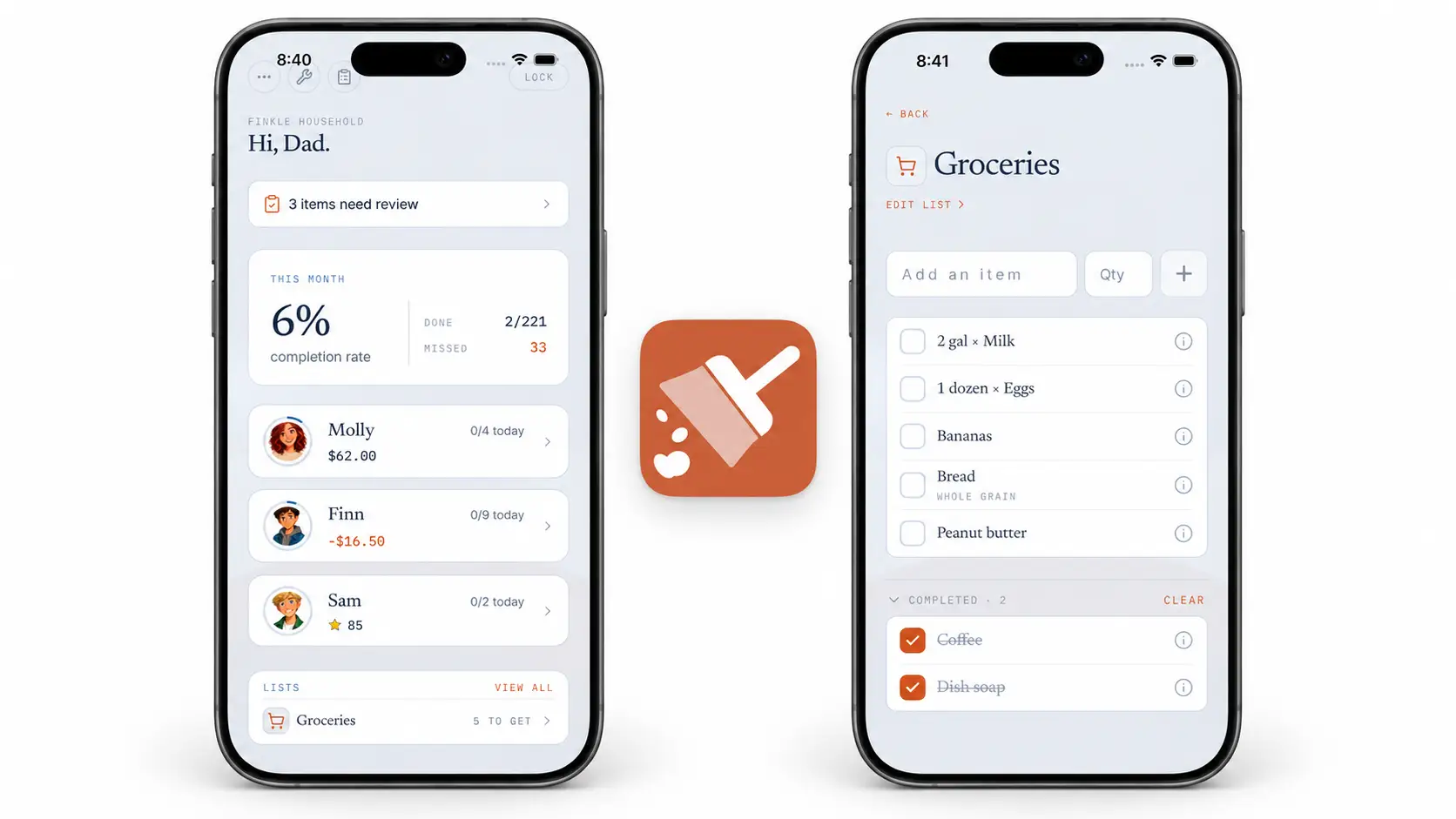
Xtra Hands lets families put expected responsibilities, paid jobs, stars, and custom rewards in the same household. Parents can assign a money value to selected work, approve completion, request optional photo proof, and maintain a clear balance and history.
The first member gets every feature free with no trial deadline. Additional members can participate across iOS and Android, so the allowance record stays shared even in a mixed-device household.
If you are building the chore side first, use our weekly chore schedule guide to choose a realistic baseline before deciding which extra jobs earn money.
Frequently asked questions
What is a normal weekly allowance for a child?
A common starting benchmark is roughly $1 per year of age per week, but there is no official standard. The right amount depends on the family budget and what the child is expected to purchase.
Is $20 a week too much allowance?
For a young child with no spending responsibilities, $20 may be more than needed for basic practice. For a teenager expected to cover outings, transportation, gifts, or clothing extras, it may be reasonable or insufficient. Judge the amount together with the expenses.
Should allowance increase every birthday?
It can, especially if you use an age-based formula. Another option is reviewing allowance when the child's spending responsibilities change. Explain what the increase is meant to cover.
Should kids save a percentage of allowance?
A family can require a savings percentage, but it is not the only approach. You can also help the child choose a goal and decide how much to set aside. The conversation and repeated practice matter more than a perfect ratio.
What happens if chores are not completed?
That depends on your model. In a pay-for-chores system, missed work may reduce earnings. In a separate allowance system, the payment remains while chores have their own consequence. In a hybrid model, baseline responsibilities remain expected and only optional paid jobs affect earnings.
Cash or an allowance app?
Cash is tangible and easy for younger children to count. An app can automate records, paid jobs, and balances across caregivers. Some families use both: digital tracking for the household and occasional cash for spending practice.
Compare the best allowance apps for kids to see which tools track a family-managed balance and which move real money or provide a debit card.
Final take
Start with an amount your family can sustain and your child can make meaningful choices with. Define what the allowance covers, decide how chores affect it, pay consistently, and keep talking about the decisions that follow. The number opens the lesson; it is not the lesson by itself.
Start free with Xtra Hands and keep chores, earnings, stars, and family rewards clear in one place.