How to Build a Chore Reward System That Works

A chore reward system for kids should make family responsibilities easier to understand, not create a second job for parents. If the rules change every week, rewards take forever to arrive, or nobody remembers what was promised, even an exciting new chart will eventually be ignored.
The systems that last are usually simple: children know what needs to be done, parents know what counts as complete, and everyone can see how effort connects to a reward. This guide walks you through building that kind of system from the ground up.
Quick answer
To build a chore reward system that works, choose a few age-appropriate chores, describe each task clearly, assign a consistent value, and decide when completed work will be reviewed. Let your child help choose meaningful rewards, but keep the final rules predictable. Start small, give specific praise quickly, and adjust the system only after you have used it consistently for at least a week or two.
Why use a chore reward system?
Children are not born knowing how to reset a kitchen, sort laundry, or notice when the trash is full. Chores are skills, and skills take instruction, repetition, and feedback.
The American Academy of Child and Adolescent Psychiatry says age-appropriate chores can help children develop organization, time management, responsibility, and independence. Its guidance recommends clear expectations, regular routines, consistency, positive feedback, and reward systems with specific goals.
A reward system adds a visible learning loop:
Your child sees a clear responsibility.
They complete the work.
You review and acknowledge it.
They make progress toward something meaningful.
The reward is not the entire lesson. It is feedback that helps connect effort, follow-through, and a positive result.
How to create a chore reward system in 7 steps
1. Decide what the system is meant to teach
Begin with one goal. Maybe your child needs practice remembering daily responsibilities, contributing to shared spaces, managing money, or finishing a task without repeated reminders.
A focused goal makes the rest of the system easier to design. If your goal is a calmer morning routine, start with chores connected to mornings. If your goal is money management, use earnings that can be saved, spent, or divided into categories.
2. Choose a small number of age-appropriate chores
Start with two or three responsibilities, not a complete household overhaul. A long list can feel impossible before the first task begins.
Useful starting points include:
Ages 4 to 6: put away toys, place clothes in the hamper, help set the table, or feed a pet with supervision.
Ages 7 to 9: unload safe dishwasher items, wipe the table, pack a school bag, fold simple laundry, or prepare pet food.
Ages 10 to 12: change sheets, take out trash, vacuum a room, clean a bathroom sink, or help prepare a meal.
Teenagers: do laundry, clean shared rooms, mow the lawn, cook a basic meal, manage recycling, or handle a rotating household job.
Age is only a starting point. Choose work that fits your child's abilities, schedule, and the amount of instruction you can provide.
3. Define exactly what "done" means
Vague chores create arguments. "Clean your room" could mean five different things to five different people. Replace it with an observable finish line.
Instead of this | Try this |
|---|---|
Clean your room | Put dirty clothes in the hamper, return toys to bins, and clear the floor |
Help in the kitchen | Put plates in the dishwasher and wipe the table after dinner |
Take care of the dog | Fill the water bowl before school and after dinner |
Do the laundry | Wash, dry, fold, and put away one load by Sunday evening |
Clear descriptions help children work more independently and give parents a fair standard for approval.
4. Choose a reward currency
Your system needs one understandable way to track progress. Common options include:
Stars or points: flexible and easy to connect to privileges or custom rewards.
Money: useful for teaching saving and spending, especially for older children.
Privileges: choices such as picking a family movie, choosing dinner, or getting extra time for a favorite activity.
A mixed system: ordinary chores earn stars while optional extra jobs earn money.
There is no universal best currency. The right choice is one your child values and you can maintain comfortably.
5. Set values before the work starts
Decide in advance what each chore earns. A five-minute daily job should not usually earn the same amount as a demanding weekly job. At the same time, avoid creating a complicated economy that requires constant calculation.
A simple starter structure might look like this:
Chore type | Example | Possible value |
|---|---|---|
Quick daily task | Feed the pet | 1 star |
Daily shared-space task | Unload the dishwasher | 2 stars |
Weekly room task | Vacuum the bedroom | 3 stars |
Optional extra job | Wash the family car | Agreed cash amount |
Keep rewards reachable enough that a younger child can experience success soon. Larger rewards can take longer, but include a few smaller choices along the way.
6. Review chores at a predictable time
Choose when completed chores will be checked: after dinner, before screen time, or at a short Sunday family meeting. Predictability prevents completed work from sitting unnoticed and reduces repeated negotiations.
Give specific feedback during the review. The CDC's guidance on praise and rewards explains that specific praise helps children understand exactly what they did well and that rewards are most effective when they follow behavior quickly. Instead of only saying "good job," try "You put every dish away without being reminded."
7. Let children redeem rewards without friction
A child should be able to see what rewards are available, what each one costs, and how close they are. When they earn enough, honor the agreement promptly whenever practical.
The American Academy of Pediatrics recommends choosing meaningful rewards with a child's participation and clearly defining how many points or completed days are required. That involvement gives children some ownership without making every chore value negotiable.
Should every chore earn a reward?
Not necessarily. Many families separate basic responsibilities from optional paid work.
For example, making the bed, putting personal belongings away, and clearing one's plate might be expected contributions. Washing the car, organizing the garage, or completing an extra yard job might earn money or bonus points.
Other families reward all chores while children are learning the routine, then gradually reduce rewards for established habits. Both approaches can work. State your household rule clearly and apply it consistently.
Stars, money, or privileges: which works best?
Reward type | Works well for | Watch out for |
|---|---|---|
Stars or points | Younger children, visual progress, flexible rewards | Too many point values can become confusing |
Money | Older children, saving goals, financial practice | Parents need clear rules about expected versus paid chores |
Privileges | Low-cost motivation and family experiences | The privilege should be realistic to deliver |
Mixed rewards | Siblings with different ages or motivations | The system still needs to feel understandable and fair |
Fair does not always mean identical. A teenager and a six-year-old can have different chores and rewards while following the same household principles.
Common reasons chore reward systems fail
The system starts too big
Ten new chores, a detailed points economy, and a huge reward catalog can produce excitement for a weekend and exhaustion by Wednesday. Launch the smallest version that can teach the habit.
Rewards arrive too late
If progress is reviewed only at the end of the month, younger children may struggle to connect today's work with the eventual result. Use quick praise and visible progress even when the larger reward takes time to earn.
The rules keep changing
Changing values after a chore is complete makes the system feel arbitrary. Set the terms first. If something needs adjustment, explain the new rule and apply it to future chores.
Parents forget to approve completed work
A reward system loses credibility when children complete tasks but their progress never updates. Build a short review into an existing family routine.
The system focuses only on mistakes
A chart filled with penalties becomes a record of failure. The AAP advises using a reward chart as a measure of success and avoiding humiliating penalties or demerits. Correct unfinished work calmly, but keep the system centered on learning and progress.
How an app can make the system easier
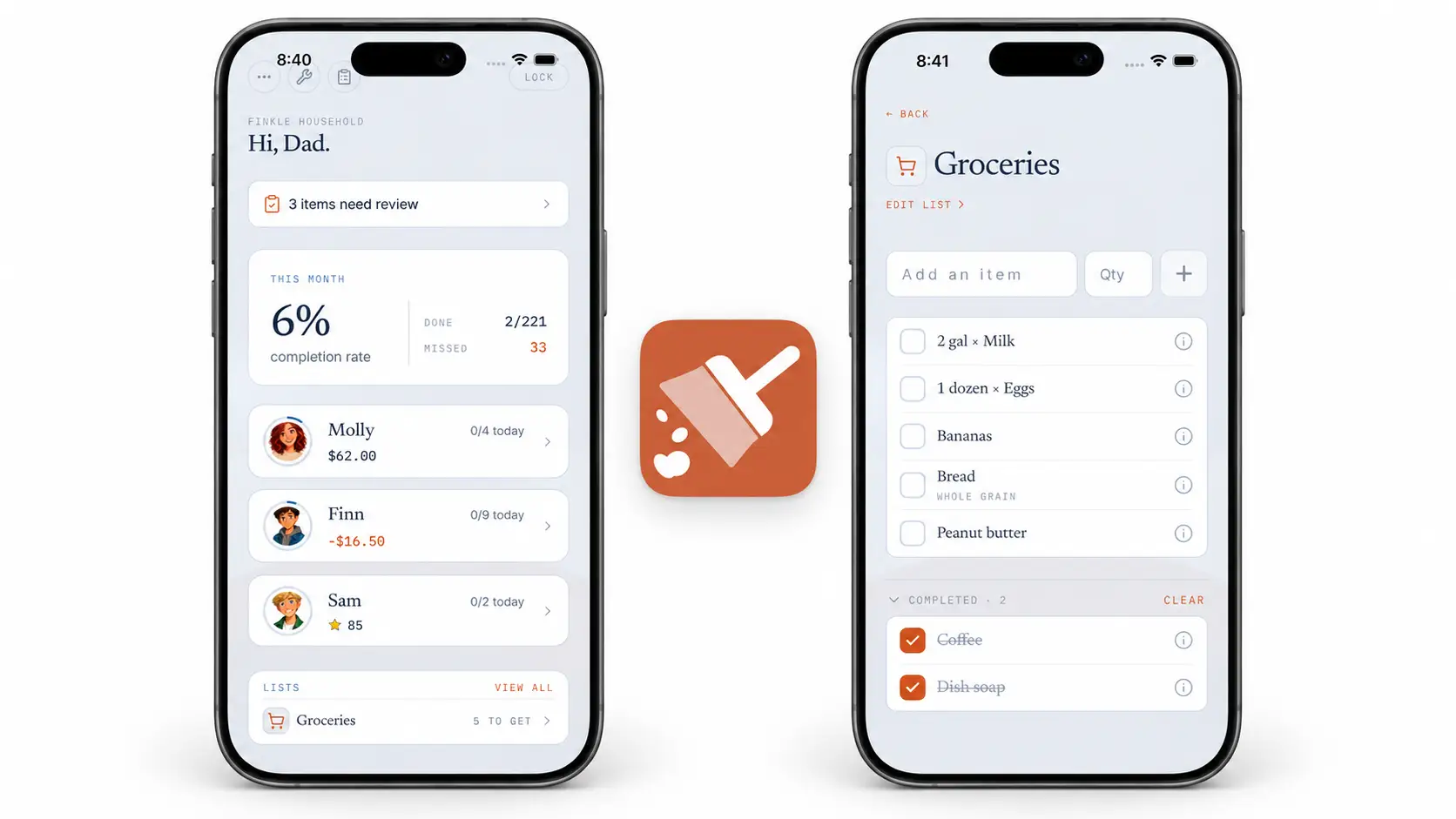
Paper charts work well when everyone sees the same refrigerator every day. A family chore app can help when schedules vary, children move between households, chores repeat on different days, or parents want approvals and balances in one place.
Xtra Hands lets families assign recurring chores, use stars or money, review completed work, request photo proof when appropriate, and manage custom rewards. The goal is not more screen time. It is less mental bookkeeping for the whole household.
If attention, reminders, and task initiation are major concerns in your home, see our comparison of the best chore apps for kids with ADHD.
Frequently asked questions
What is a good reward for doing chores?
A good reward is meaningful to the child, affordable for the parent, and realistic to provide. It might be stars toward a privilege, allowance, choosing a family activity, extra time for a favorite hobby, or a custom reward your child helped select.
How often should children receive chore rewards?
Give praise and visible credit soon after the chore is reviewed. Younger children often benefit from small rewards they can reach daily or weekly. Older children may be comfortable saving toward larger goals over a longer period.
Should siblings earn the same amount?
Not always. Values can reflect the time, difficulty, and responsibility involved. Explain the system openly so different values feel reasonable instead of mysterious.
Can rewards make children expect payment for everything?
Families can prevent that by defining which chores are ordinary family responsibilities and which are optional earning opportunities. Rewards can also be reduced gradually as a behavior becomes an established habit.
What should I do when a chore is done poorly?
Treat it as a skill that may still need teaching. Show the child what is missing, let them correct it, and keep the standard consistent. Avoid moving the finish line after the work begins.
Final take
A chore reward system for kids works when it is easy to understand and easy for parents to maintain. Start with a few clear jobs, choose rewards together, review progress consistently, and recognize specific effort. The system does not need to be elaborate. It needs to be trusted.
Try Xtra Hands to keep chores, approvals, stars, money, and family rewards organized in one place.