Best Chore Apps for Kids with ADHD in 2026
For kids with ADHD, chores usually fail for one of three reasons: the task is too vague, the reward comes too late, or the system depends on memory. A good chore app should solve those problems instead of adding another dashboard for parents to manage.
The best chore apps for kids with ADHD keep tasks visible, break work into clear steps, use reminders carefully, and connect effort to a reward quickly enough that the habit can actually form. The right app is not always the one with the most features. It is the one your household can keep using after the first enthusiastic week.
Quick answer
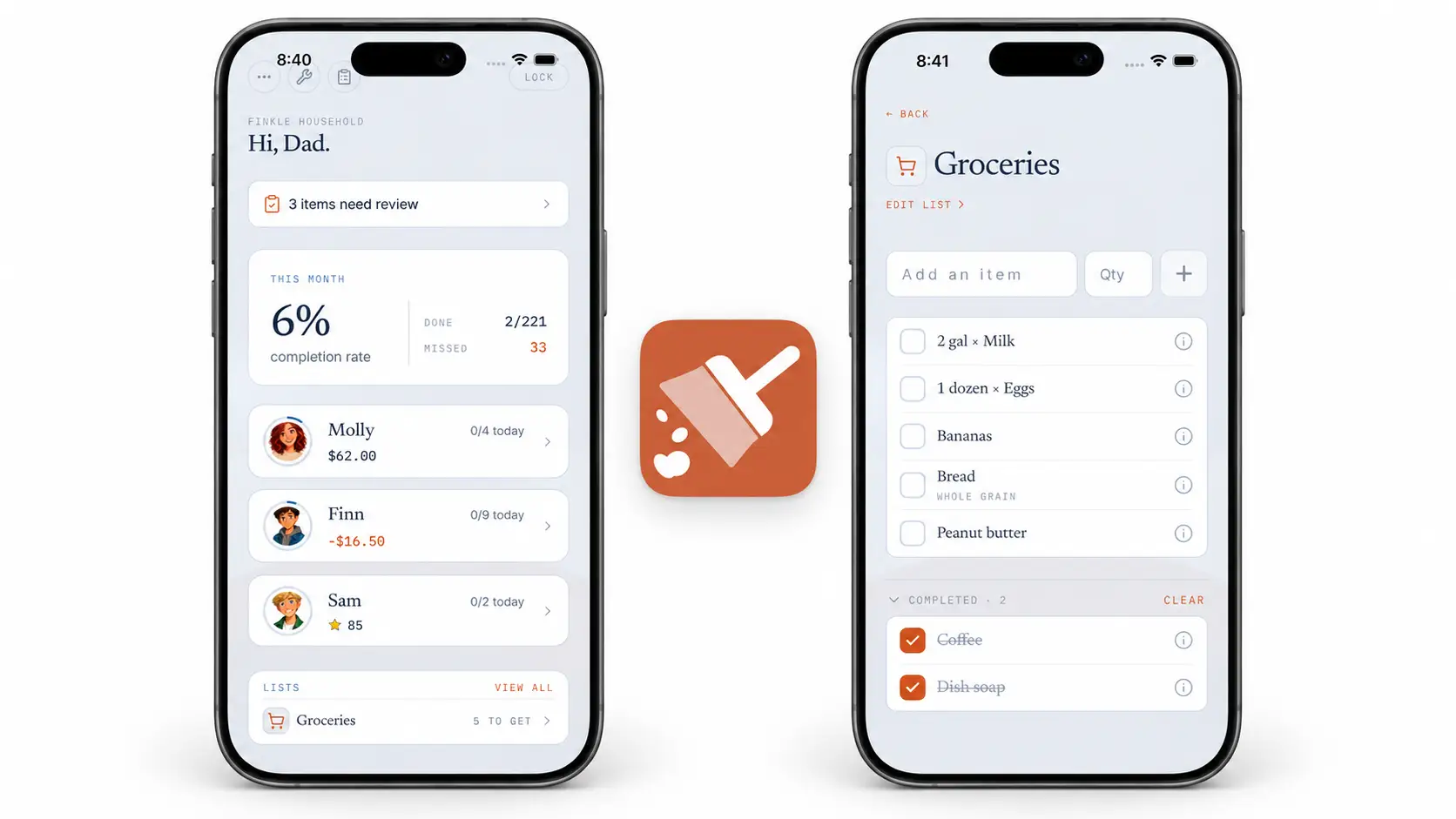
The best chore app for a child with ADHD is one that shows a short task list, gives clear completion feedback, lets parents approve work, and connects chores to rewards without turning the whole house into a negotiation. Xtra Hands is built for that kind of household loop: chores, reminders, parent review, rewards, and balances all stay in one place.
What makes a chore app ADHD-friendly?
An ADHD-friendly chore app reduces the amount of remembering a child has to do. Instead of expecting a kid to hold a full routine in their head, the app should make the next action obvious.
Look for these features:
Short visible task lists instead of overwhelming daily checklists.
Recurring chores that show up automatically on the right day.
Reminders that nudge without becoming background noise.
Immediate feedback when a chore is completed or approved.
Rewards that are clear before the work starts.
Parent controls so the system stays consistent.
The CDC estimates that 7 million U.S. children ages 3 to 17 have a current ADHD diagnosis. That means many families are not dealing with laziness or defiance. They are trying to build routines around attention, working memory, and follow-through.
Best chore apps for kids with ADHD compared
App | Best for | Rewards | Parent approval | Shared household use |
|---|---|---|---|---|
Xtra Hands | Families that want chores, allowance, stars, and rewards in one system | Money, stars, and custom rewards | Yes, including proof-based approval | Yes |
OurHome | Simple shared chore lists | Points | Varies by setup | Yes |
Homey | Allowance tied to chores | Money-focused | Yes | Yes |
S'moresUp | Gamified family routines | Points and rewards | Yes | Yes |
Cozi | Family calendar plus basic lists | No built-in chore reward system | No dedicated chore approval flow | Yes |
Why immediate feedback matters
Delayed rewards are hard for many kids, and they are especially hard when attention and motivation already fluctuate. A reward that arrives days later does not always feel connected to the task that earned it.
That is why chore systems work better when the loop is short:
The child sees the chore.
The child completes the chore.
The parent approves it if approval is required.
The app updates the balance, stars, or reward progress.
The American Academy of Child and Adolescent Psychiatry notes that chores can help children learn time management, organization, responsibility, and delayed gratification. Their guidance also recommends clear expectations, regular routines, consistency, and reward systems with specific goals. In other words, the structure matters as much as the chore itself.
Why Xtra Hands works well for ADHD households
Xtra Hands is useful for ADHD households because it does not rely on one giant chore chart. It gives parents a way to create recurring chores, assign them to the right household members, rotate shared work, and keep the earning system honest.
Recurring chores reduce setup fatigue
Parents should not have to rebuild the chore list every morning. With recurring chores, the routine can appear automatically. That matters because the parent system has to be sustainable too.
Rewards can be stars or money
Some kids are motivated by money. Others do better with stars, privileges, or custom rewards. Xtra Hands lets a household choose what fits each member instead of forcing every kid into the same allowance model.
Parent approval keeps the system fair
For many families, the hard part is not assigning the chore. It is deciding whether the chore was actually done. Parent approval helps keep the reward connected to the standard, not just the checkbox.
Photo proof can help when reminders are not enough
Some chores are easy to mark complete too early. Photo proof gives parents a way to review the work before rewards move. That can be especially helpful for chores like cleaning a room, taking out trash, or resetting a shared space.
How to start without overwhelming your child
The biggest mistake is adding too many chores on day one. A child who already struggles with task initiation will not magically become consistent because the list moved into an app.
Start smaller:
Pick one daily chore and one weekly chore.
Use clear names like "put dirty clothes in hamper" instead of "clean room."
Choose rewards before the chore starts.
Review completed chores at the same time each day.
Add more only after the first routine feels normal.
A simple system used every day beats a perfect system abandoned after a week.
What parents should avoid
A chore app can help, but it cannot rescue a system that changes every day. Try to avoid:
Assigning a long list of chores immediately.
Changing reward values constantly.
Using rewards as a surprise bribe during an argument.
Approving everything in a rushed batch without checking the work.
Comparing siblings who have different ages, abilities, or schedules.
Kids with ADHD often do better when the structure is boring in the best way: predictable, visible, and consistent.
Frequently asked questions
Do chore apps help kids with ADHD?
They can, especially when the app makes chores visible, recurring, and easy to review. The app should reduce memory load, not create a complicated system the child and parent both have to manage.
Should kids with ADHD get paid for chores?
It depends on the household and the child. Some families use money, some use stars or privileges, and some separate ordinary family responsibilities from paid work. The important part is making the rule clear before the chore starts.
How many chores should a child with ADHD have?
Start with fewer than you think. One daily chore and one weekly chore is enough to test the system. Add more after the first routine is working consistently.
What is the best reward system for ADHD chores?
The best reward system is specific, immediate enough to feel connected, and consistent. Stars, money, privileges, and custom rewards can all work when the child understands what they are earning and how to redeem it.
Final take
The best chore app for kids with ADHD is the one that makes the next step obvious and the reward system predictable. If your current chore chart depends on memory, repeated reminders, or late-night allowance math, it is probably asking too much from everyone.
Xtra Hands gives families one place to manage chores, reminders, approvals, stars, money, and rewards, so responsibility is easier to see and easier to follow through on.
Try Xtra Hands and build a chore routine your household can actually keep using.