How to Get Kids to Do Chores Without Nagging

If every chore begins with a reminder and ends with a raised voice, the problem may not be effort. The household may be relying on one parent to notice, remember, assign, repeat, inspect, and follow up on every task.
Learning how to get kids to do chores without nagging is less about finding the perfect phrase and more about building a system that does not depend on constant verbal reminders. Clear jobs, visible routines, predictable deadlines, and calm follow-through can move responsibility out of a parent's head and into a structure the whole family can understand.
Quick answer
To get kids to do chores without nagging, assign fewer jobs, describe each one clearly, connect it to a consistent time or event, and keep the list visible. Give one reminder instead of five, offer limited choices when possible, and follow through with an agreed reward or consequence. Praise specific effort and teach the task before expecting independence.
Why nagging happens
Nagging usually develops as a loop:
A parent gives a broad direction.
The child does not start immediately.
The parent repeats the direction with more urgency.
The child learns that the first reminder does not require action.
Both people become frustrated before the chore even begins.
This pattern does not mean the child is lazy or the parent is failing. It means repeated reminders have become part of the routine.
The goal is not zero reminders forever. Children are still learning to plan, transition, and follow through. The goal is to replace an open-ended stream of reminders with a clear system and a predictable response.
9 ways to get kids to do chores without nagging
1. Make the chore specific
"Clean your room" contains many decisions. Does it mean make the bed, pick up clothes, organize the desk, vacuum, or all of the above? A child can genuinely believe the job is finished while a parent sees five missing steps.
Use an observable finish line instead:
Vague chore | Clear version |
|---|---|
Clean your room | Put clothes in the hamper, return toys to bins, and clear the floor |
Help with dinner | Set four plates, four cups, and napkins before 6:00 |
Take care of the dog | Fill the water bowl and give the evening food after homework |
Do the laundry | Move the load to the dryer, fold it, and put it away |
The CDC's guidance on giving directions recommends telling children exactly what behavior is expected and, for younger children, giving one direction at a time. Although its examples focus on young children, the clarity principle is useful at any age.
2. Connect chores to an existing routine
"Later" is difficult to remember and easy to renegotiate. Attach the chore to something that already happens:
Feed the pet after breakfast.
Unload the dishwasher before screen time.
Put laundry away after changing out of school clothes.
Take trash out after dinner on Tuesday.
Reset the bedroom before the weekend begins.
The American Academy of Child and Adolescent Psychiatry recommends regular routines, clear expectations, and consistency when introducing chores. A stable cue reduces the number of moments when a parent must decide to remind.
3. Put the responsibility somewhere visible
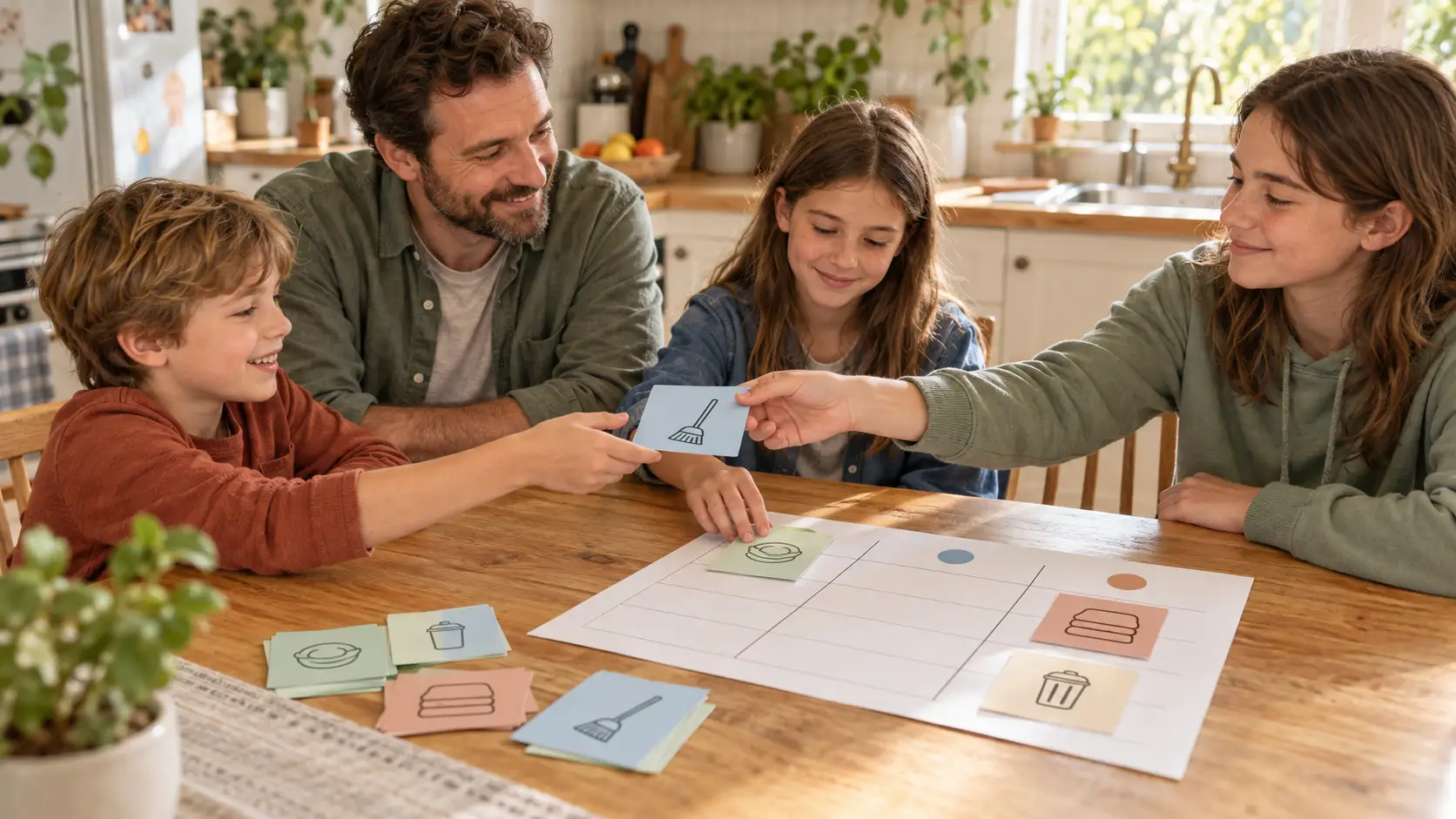
If chores live only in a parent's memory, the parent becomes the household notification system. Use a paper chart, whiteboard, printed checklist, or shared chore app so children can check their responsibilities without asking.
A visible system should answer four questions:
What do I need to do?
When does it need to be done?
What does complete mean?
What happens after I finish?
Keep the list short enough to scan. A crowded dashboard can become just as invisible as a forgotten paper chart.
4. Give one calm reminder
Decide how reminders work before the next chore is late. For example: the child gets one calm verbal reminder, then the agreed consequence or delay of a privilege follows if the chore remains unfinished.
A reminder can be brief: "The dishwasher is due before screen time." Avoid adding a speech about last week, character, attitude, or everything else that still needs doing.
Consistency matters more than intensity. If the fifth reminder is the only one that carries a response, children learn to wait for reminder five.
5. Offer limited choices
Choice can reduce resistance without making the responsibility optional. Offer two outcomes you can accept:
"Would you rather unload the dishwasher or take out the trash?"
"Do you want to finish before dinner or immediately after?"
"Would you rather clean the sink or the mirror?"
Do not ask whether a required chore will happen. Let the child choose the task, order, method, or timing within clear boundaries.
6. Teach the chore before handing it over
Children cannot complete a standard they have never been shown. What looks like avoidance may be uncertainty about where supplies belong, which cleaner is safe, or what "finished" looks like.
Use a simple progression:
Do the chore while the child watches.
Do it together.
Let the child do it while you answer questions.
Let the child complete it independently.
Review the result against the original standard.
If the job is incomplete, point to the missing step instead of redoing everything in silence. Chores are skills, and correction is part of learning them.
7. Notice the behavior you want repeated
Parents naturally pay attention when work is missing. Independence also needs to be noticed when it appears.
Specific praise tells a child what worked:
"You started without a reminder."
"You checked the whole list before saying you were done."
"You remembered the trash schedule on your own."
"You fixed the missed step without arguing."
The CDC's guidance on praise and rewards explains that specific praise helps children understand which behavior a parent values. Praise, attention, and shared activities can also act as rewards without costing money.
8. Use rewards without turning every chore into a negotiation
Rewards can help a new routine get started, but children should know the terms before the work begins. Use a consistent system instead of offering a surprise bribe after resistance starts.
Families can use:
Stars or points toward a custom reward.
A weekly allowance connected to agreed chores.
Money for optional extra jobs.
Privileges such as choosing a movie or family activity.
Ordinary unpaid responsibilities plus paid bonus work.
Our guide to whether kids should get paid for chores compares direct allowance, separate allowance, and hybrid systems. For the complete setup process, see how to build a chore reward system that works.
9. Follow through without a long argument
A consequence works best when it is known in advance, connected to the responsibility, and delivered calmly. If the agreement says chores happen before gaming, gaming waits until the chore is complete. The parent does not need to win a debate first.
Keep the response proportionate. A missed trash run does not require a week-long punishment. The point is to make the sequence predictable: responsibility first, then privilege.
A one-week reset for a household stuck in nagging
Day 1: choose two chores
Pick one daily and one weekly responsibility per child. Do not attempt to repair the entire household at once.
Day 2: define "done"
Write two or three concrete completion steps for each job. Ask the child to explain the finish line back to you.
Day 3: teach the process
Complete each chore together once. Show where supplies live and what safety rules apply.
Day 4: choose timing and reminders
Attach each chore to an existing routine and agree that one reminder will be given. Decide what follows if the job remains unfinished.
Day 5: make progress visible
Put the checklist where the child can see it or add the recurring task to your family chore system.
Day 6: recognize independent action
Look for one specific behavior to acknowledge, especially starting, remembering, checking, or correcting.
Day 7: review without blame
Ask what was easy, what was confusing, and what needs adjustment. Change the task or timing if necessary, but do not replace a workable system simply because the first week was imperfect.
What not to do when kids resist chores
Do not assign ten new chores at once. Overload creates avoidance before a routine has a chance to form.
Do not change the standard after the job begins. Define completion first.
Do not redo the chore every time. Teach the missing step and let the child correct it.
Do not make every missed chore a character judgment. Address the task and the agreement.
Do not threaten consequences you will not use. Choose something reasonable enough to follow through on calmly.
Do not compare siblings. Match responsibilities to age, ability, and schedule.
How a chore app can reduce reminders
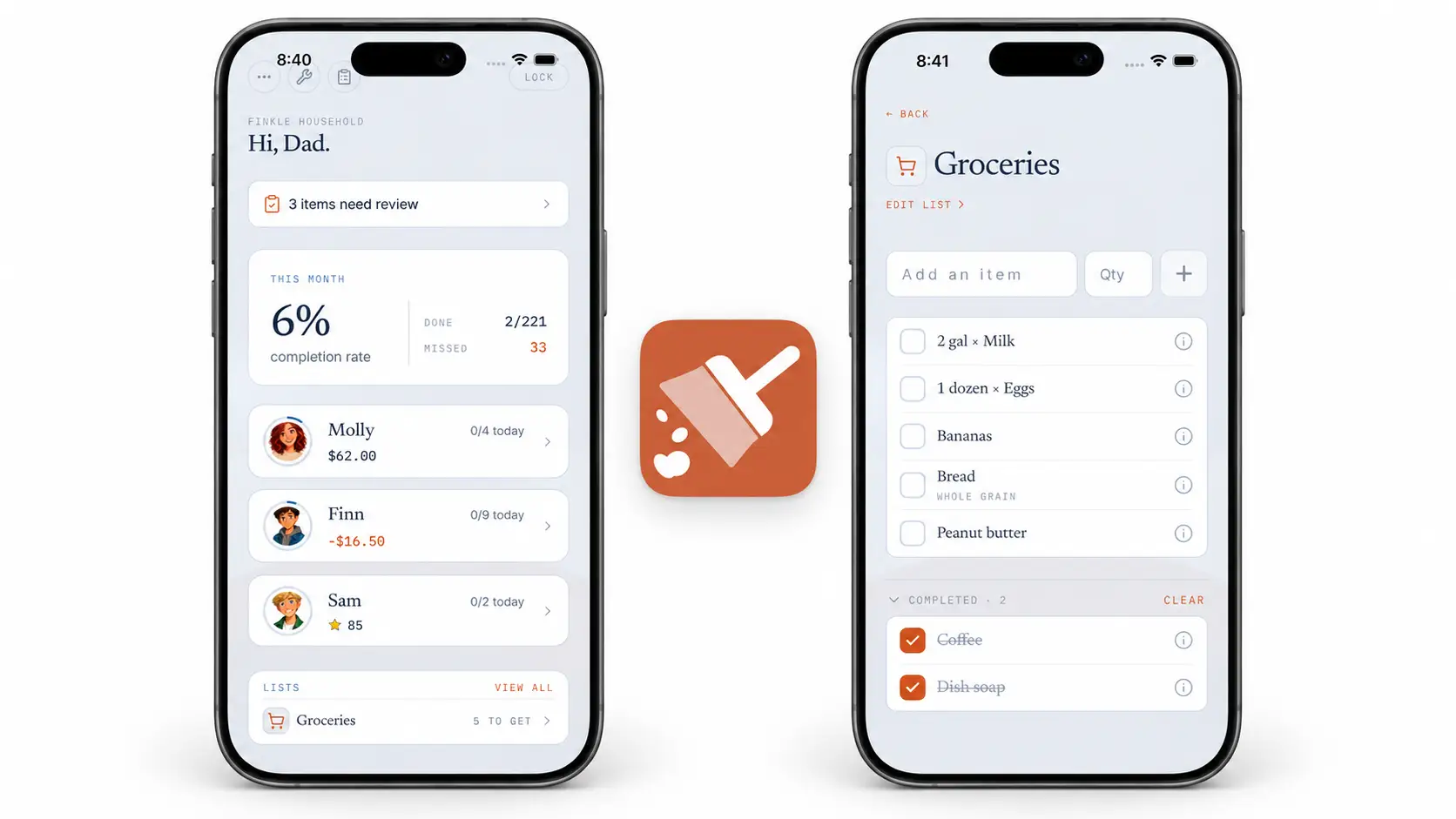
A chore app cannot create consistency by itself, but it can make the system visible without requiring a parent to repeat it aloud. Recurring chores return on schedule, each person can see assigned work, and approvals or rewards happen in one place.
Xtra Hands supports recurring and rotating chores, reminders, parent review, optional photo proof, stars, money, and custom rewards. One member can use every feature free, so a parent can build and test the household system before inviting the rest of the crew.
Families managing attention or working-memory challenges may need even shorter lists and more immediate feedback. Our guide to the best chore apps for kids with ADHD explains what to look for.
For a broader choice of household tools, compare the best chore apps for families and focus on the reminders, assignments, and review process your home actually needs.
Frequently asked questions
Why does my child only do chores after I yell?
If yelling consistently comes after several reminders, it may have become the signal that action is finally required. Reset the pattern with one clear direction, one reminder, and calm follow-through on a consequence the child already understands.
How many times should I remind my child about chores?
There is no universal number, but repeated reminders can teach children to wait. Many families use one planned reminder after making the task, deadline, and consequence clear. Younger children and children with support needs may require different cues.
What is a good consequence for not doing chores?
Use a modest, predictable consequence connected to the routine. A common example is delaying a privilege until the responsibility is complete. Avoid consequences that are extreme, unrelated, or difficult to enforce.
Should I pay my child to do chores without reminders?
You can reward independent follow-through with money, stars, privileges, or specific praise. Decide whether the reward is for completing the chore, starting independently, or both, and explain the rule before the chore is due.
What if my child genuinely forgets chores?
Move the reminder out of conversation and into the environment. Use a visible list, consistent time, recurring notification, or object placed near the next step. Forgetting calls for a stronger cue, not necessarily a stronger punishment.
Final take
Getting kids to do chores without nagging does not mean expecting perfect independence overnight. It means replacing repeated verbal management with a system children can learn: clear tasks, visible expectations, predictable timing, one calm reminder, and consistent follow-through.
Start free with Xtra Hands and build a chore routine that does more of the reminding for you.