Daily Routine Chart for Kids: Morning to Bedtime

A daily routine chart for kids turns repeated instructions into a predictable sequence children can learn to follow. A useful chart covers the major transitions of the day: waking up, getting out the door, arriving home, completing responsibilities, winding down, and going to bed.
The chart should not schedule every minute or expect every day to look identical. Its job is to show what comes next, reduce decision fatigue, and help children take increasing ownership. Below are ready-to-use routines from morning to bedtime, plus versions for activity days and weekends.
What should be on a child's daily routine chart?
Most family routine charts need five sections:
Morning: Wake, dress, eat, complete hygiene, and gather belongings.
After school: Put away school gear, eat, decompress, move, and handle homework.
Household responsibilities: Complete personal and family chores.
Evening: Eat together, clean up, finish schoolwork, and prepare tomorrow's items.
Bedtime: Complete hygiene, quiet connection, and sleep at a consistent time.
Keep fixed anchors consistent while allowing flexibility inside each block. Breakfast may always happen before teeth, but the child might choose whether to get dressed before or after breakfast. Predictability and choice can coexist.
Sample daily routine chart for school-age kids
Part of day | Routine |
|---|---|
Morning | Wake, bathroom, dress, breakfast, teeth and hair, backpack, shoes |
After school | Put away gear, wash hands, snack, connect, move or decompress |
Late afternoon | Homework or reading, household chore, free time |
Evening | Dinner, cleanup, tomorrow preparation, family or free time |
Bedtime | Quick tidy, wash or bathe, pajamas, brush teeth, read, lights out |
This is a sequence, not a universal clock. Add times only where the household truly needs them, such as leaving for school, starting an activity, or turning out the lights.
Morning routine chart for kids
A strong morning routine begins the night before. Clothes, backpacks, forms, equipment, and lunch supplies should have clear homes so the morning is about following steps rather than finding missing objects.
Wake up and use the bathroom.
Get dressed.
Make or straighten the bed.
Eat breakfast and clear the place.
Brush teeth and complete hair care.
Put on shoes and outerwear.
Collect backpack, lunch, water, and activity gear.
Leave at the planned time.
Younger children may need pictures and one instruction at a time. Older children can use a short written checklist and a single departure deadline. Our guide to the best morning routine apps for kids explains when digital support can reduce repeated reminders.
After-school routine chart
The after-school transition should account for hunger, fatigue, movement, homework, and family responsibilities. Some children focus best immediately. Others need a real break after spending the day following a school schedule.
Hang backpack and coat; put shoes away.
Take lunchbox, bottle, and papers to their assigned places.
Wash hands, get water, and eat a planned snack.
Talk, rest, play outside, or move.
Complete homework or reading at the agreed time.
Finish one short household or personal responsibility.
Pack completed schoolwork and prepare for the next activity.
The American Academy of Pediatrics notes that healthy after-school routines may include food, exercise, relaxation, and study in whichever order works for the child. See our complete after-school routine guide for three sample schedules and troubleshooting tips.
Evening routine chart
The evening routine connects the active day to bedtime. Keep the essentials visible, especially on nights when sports, lessons, or late work hours compress the schedule.
Finish remaining schoolwork or a planned activity.
Help prepare, serve, or clean up dinner.
Complete the day's household responsibility.
Check the calendar and weather for tomorrow.
Pack backpack and activity equipment.
Choose or lay out clothes.
Put shared spaces and personal belongings through a short reset.
Begin the bedtime wind-down.
A family chore chart can clarify who owns dinner cleanup and other repeating jobs. Keep demanding weekly work away from the nights already crowded by activities.
Bedtime routine chart for kids
A bedtime routine should be calm, predictable, and short enough to repeat consistently. The AAP's Brush, Book, Bed program recommends toothbrushing, reading together, and going to bed at a regular time.
Complete a quick bedroom or play-area tidy.
Use the bathroom and wash or bathe as planned.
Put on pajamas and place dirty clothes in the hamper.
Brush and floss teeth with age-appropriate adult help.
Choose a quiet connection activity such as reading or talking.
Use the final bathroom and water opportunity.
Turn lights out at the regular bedtime.
The AAP advises keeping school-age bedtime routines manageable, often around 30 minutes, and gradually giving children more ownership as they grow.
Build the chart backward from sleep
Bedtime should support the sleep a child needs rather than absorb whatever time remains. The Centers for Disease Control and Prevention lists these daily sleep ranges:
Age | Recommended daily sleep |
|---|---|
1-2 years | 11-14 hours, including naps |
3-5 years | 10-13 hours, including naps |
6-12 years | 9-12 hours |
13-17 years | 8-10 hours |
Start with the required wake time, count backward for sleep, then allow enough time for the bedtime sequence. If the chart routinely pushes bedtime late, remove or move evening tasks rather than rushing every step.
Daily routines by age
Ages 3-5
Use three to five pictures per routine and keep each direction concrete. Adults still manage time, safety, hygiene quality, and the final check. Children can put pajamas away, carry safe dishes, place toys in bins, and choose between two acceptable options.
Ages 6-8
Children can follow short sequences with visual support. Let them own familiar steps such as dressing, packing basic belongings, clearing dishes, feeding a pet, and preparing clothes while adults monitor timing.
Ages 9-12
Tweens can begin managing the clock, school assignments, personal laundry, simple food, and activity gear. Use a written checklist and review outcomes instead of narrating every action.
Teenagers
Teens need anchors more than a childlike chart: departure time, commitments, dinner expectations, household work, device boundaries, and sleep. Involve them in designing the routine and expect them to communicate when plans change.
Pair routine steps with responsibilities from our age-appropriate chores guide.
Routine chart for activity days
Busy days need a minimum version of the routine, not an attempt to compress every regular task.
Anchor | Minimum routine |
|---|---|
Morning | Dress, eat, hygiene, collect school and activity gear |
After school | Put away school items, eat, change, pack water and equipment |
After activity | Dinner, essential homework, tomorrow reset |
Bedtime | Hygiene, quiet connection, lights out on time |
Move optional chores and long projects to another day. Protect food, medication if applicable, essential school preparation, connection, hygiene, and sleep.
Weekend routine chart
Weekends benefit from structure without reproducing a school day. Keep a few anchors:
A reasonably consistent wake time and bedtime.
Meals and hygiene.
One household work block.
Movement or outdoor time.
Unstructured play, rest, or social time.
A Sunday or final-evening school reset.
Use broader blocks instead of a minute-by-minute chart. Children can help choose when the chore block and family plans happen while the adult protects the essential anchors.
How to make a routine chart kids can actually use
Start with one difficult transition. Build the morning or bedtime chart before mapping the entire day.
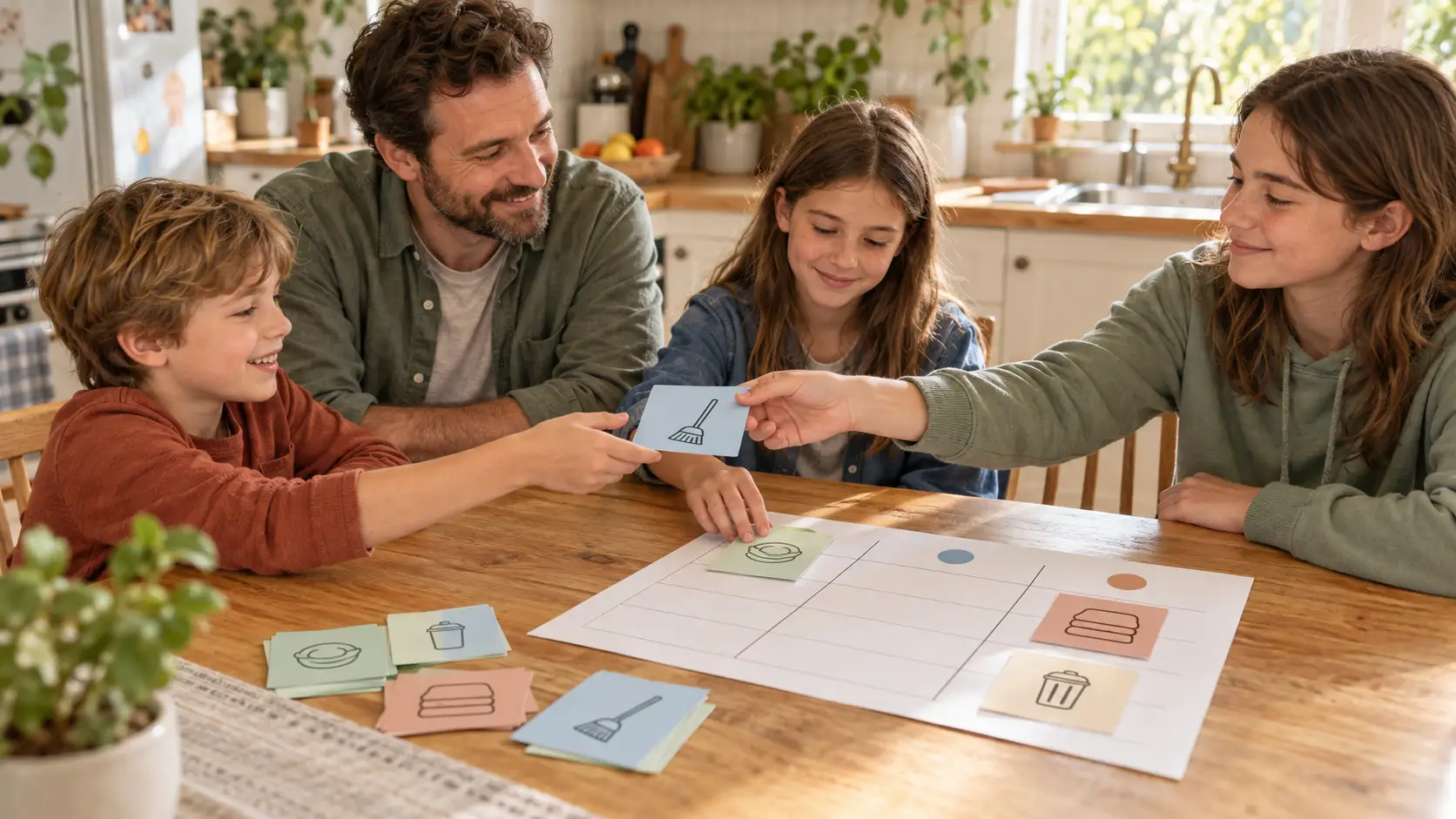
Use the child's format. Try photos for young children, icons and words for readers, and concise checklists for older kids.
Keep steps observable. "Backpack on hook" is clearer than "be responsible."
Place it where the routine happens. The morning list belongs near the bedroom, bathroom, or exit path.
Teach before expecting. Walk through the sequence and practice hard steps.
Use routine cues. Tie steps to waking, arriving home, dinner ending, or bedtime beginning.
Review after one week. Remove unnecessary steps and adjust unrealistic timing.
Why daily routine charts stop working
There are too many steps. Combine familiar actions and keep only useful prompts.
The child never learned the jobs. Demonstrate and practice instead of adding more reminders.
The schedule ignores transition time. Include time to wake up, come home, change direction, and settle.
The chart requires constant adult enforcement. Use visible cues, alarms, or scheduled reminders.
Every day is treated the same. Create regular, activity-day, and weekend versions.
There is no room for choice. Let children choose the order of compatible steps or select between acceptable options.
The routine is never updated. Change it when school times, abilities, and family needs change.
Use Xtra Hands for routines and responsibilities
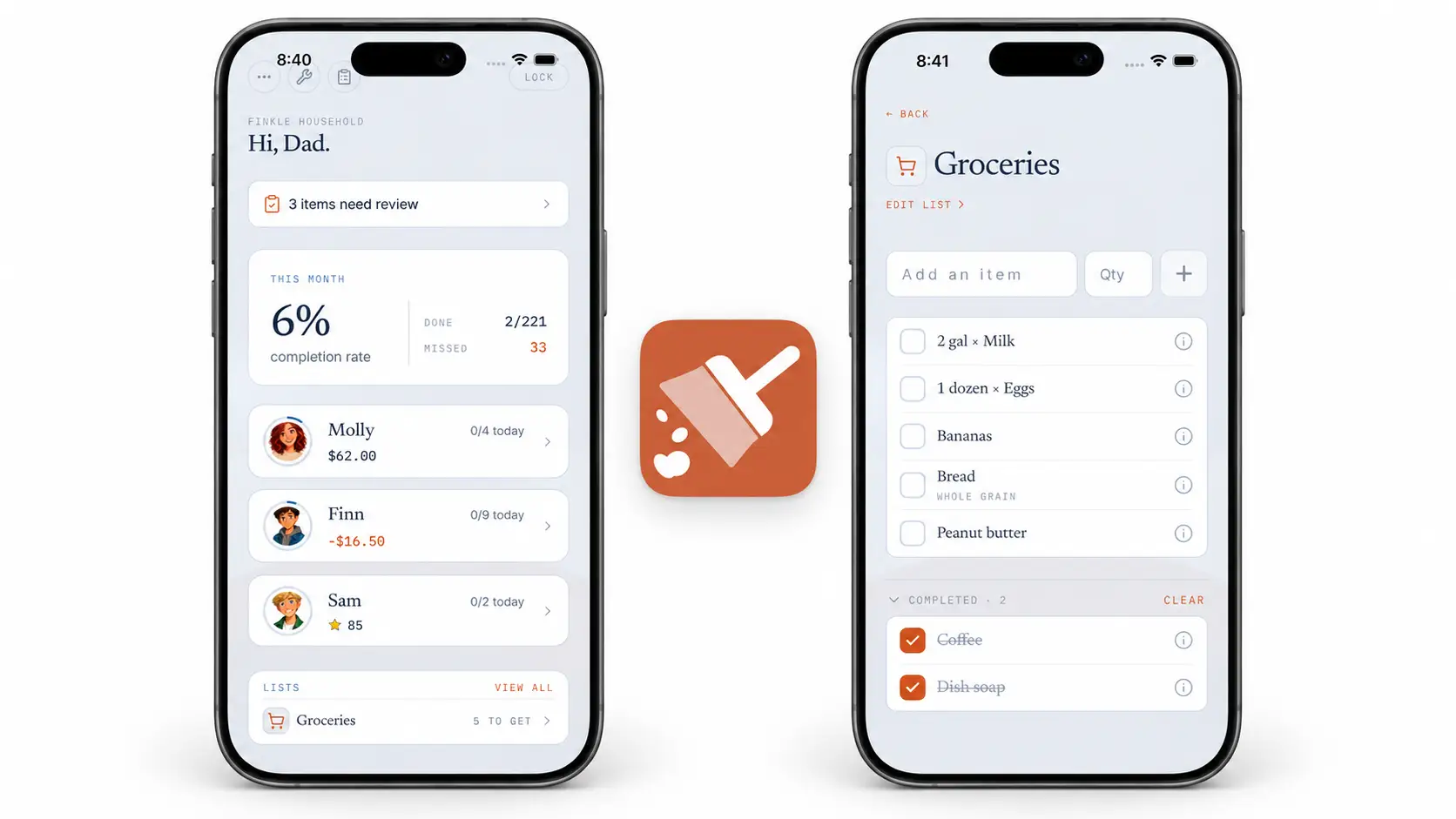
Xtra Hands can schedule the repeatable actions inside a child's day: pack the backpack, empty the lunchbox, feed the pet, complete a chore, lay out clothes, or prepare activity gear. Families can use recurring and one-time tasks, reminders, approvals, optional photo proof, and money, stars, or custom rewards.
Unpaid responsibilities can stay beside rewarded work, and Xtra Hands syncs across iOS and Android for mixed-device families. The first member receives every feature free with no trial deadline.
Frequently asked questions
Do daily routine charts work for kids?
They can work well when they are short, visible, age-appropriate, and taught through practice. A chart is an external reminder, not a substitute for instruction, support, sleep, or realistic expectations.
How many steps should a child's routine chart have?
Young children may need three to five visible steps at a time. Older children can handle longer lists, but familiar actions should be grouped so the chart remains easy to scan.
Should a routine chart include exact times?
Use exact times for true deadlines such as leaving, activities, and bedtime. For the rest, a sequence or broad time block is often easier to maintain.
Should kids earn rewards for following routines?
Rewards can help establish a new or difficult habit, but routine ownership should also bring natural benefits such as more independence, less rushing, and time for preferred activities. Keep the reward rule simple and clear.
What if my child still needs reminders?
Check whether the child understands the steps, can see the chart, has enough time, and is rested enough to follow it. Prompt them to consult the system rather than repeating the entire list aloud.
Build the day one transition at a time
Choose the part of the day that creates the most stress. Write the smallest useful sequence, practice it together, and adjust after a week. Once that transition becomes familiar, build the next one.
A daily routine chart should create more independence and breathing room, not turn childhood into a checklist. Use Xtra Hands to organize the responsibilities that help your family's day run.