After-School Routine for Kids: A Simple Schedule
A good after-school routine gives kids a predictable path from arriving home to being ready for the evening. It should include a landing routine for school gear, food and water, time to decompress, movement, homework or reading, a small household responsibility, and preparation for tomorrow.
The order does not need to be identical for every child. Some kids need to move before they can focus. Others want to finish homework immediately. The goal is a repeatable sequence that meets your child's needs and reduces the number of decisions and reminders packed into a tired part of the day.
A simple after-school routine
Land: Put shoes, coat, backpack, lunchbox, and papers in their homes.
Refuel: Have water and a planned snack.
Reconnect: Check in briefly without demanding a full report.
Decompress: Allow quiet time, outdoor play, or movement.
Focus: Complete homework, reading, or school follow-up.
Contribute: Finish one short personal or household responsibility.
Prepare: Reset the backpack and anything needed tomorrow.
The American Academy of Pediatrics says healthy after-school routines may include a snack, exercise, relaxation, and study in whichever order works best for the child. That flexibility matters: predictability does not require one universal schedule.
Step 1: Create an arrival landing zone
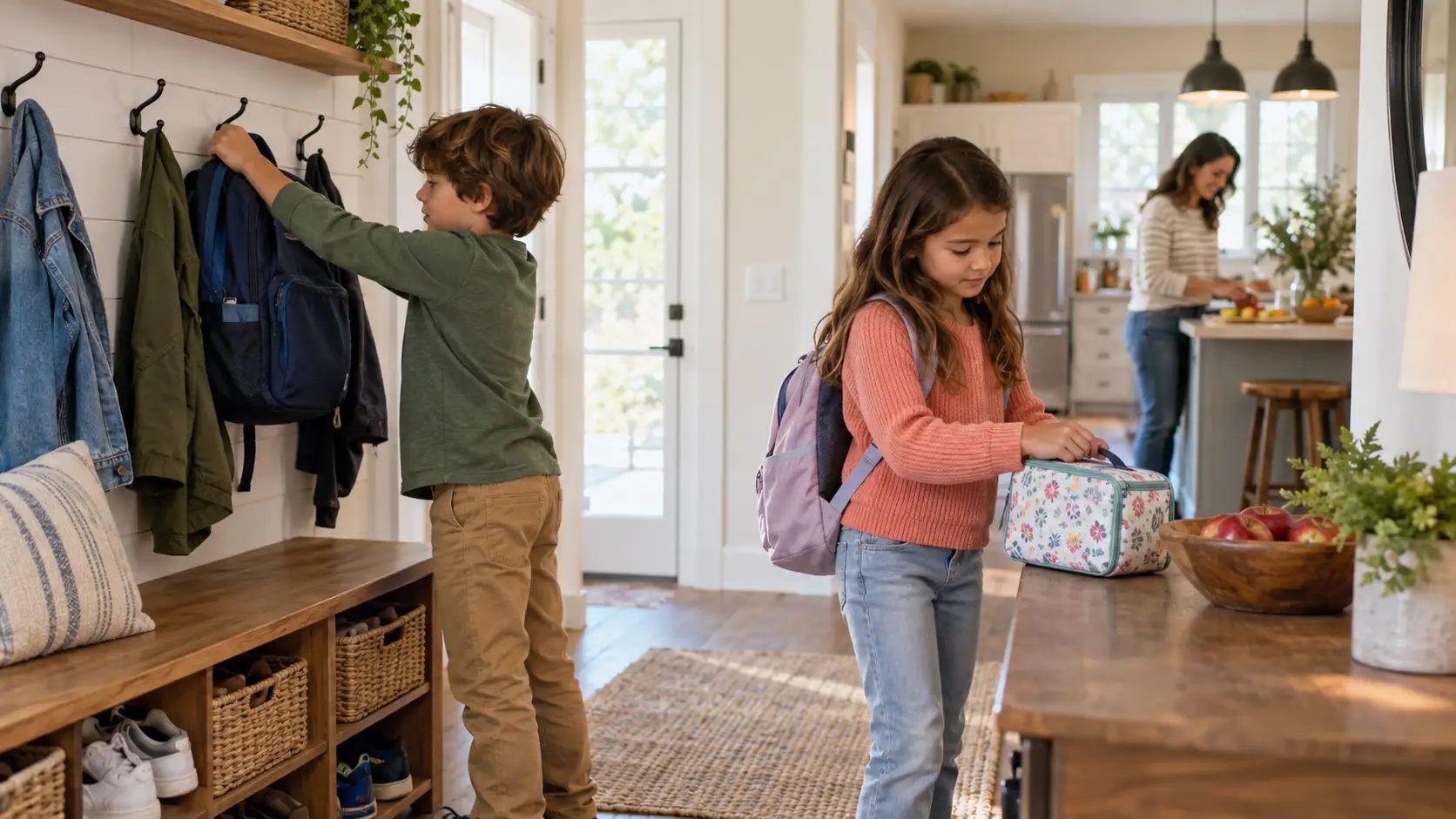
The first five minutes can prevent tomorrow morning's scramble. Choose one accessible place for backpacks, coats, shoes, lunchboxes, water bottles, school papers, and activity gear.
A complete arrival reset might be:
Hang the backpack and coat.
Put shoes in their assigned place.
Take the lunchbox and water bottle to the kitchen.
Place papers needing adult attention in one tray.
Put library books or homework in the study area.
Keep hooks and containers within reach. The AAP recommends a single "launch pad" or staging area for school items so children know where to put them and where to find them the next morning.
Step 2: Offer a planned snack and water
Children often arrive home hungry, thirsty, and mentally tired. A predictable snack prevents the daily negotiation over what is available and helps create a clean transition from school.
Keep a short list of family-approved options children can manage at their age. Younger children may choose between two prepared snacks. Older children can assemble something simple, clean their place, and note when a staple is running low.
A snack is also a natural time for a low-pressure check-in. Try one specific question instead of "How was school?" Ask what felt easy, what felt difficult, what made them laugh, or whether anything needs attention before tomorrow.
Step 3: Make room for decompression
Six or more hours of following instructions, navigating peers, shifting subjects, and managing noise can leave children depleted. A child who falls apart at home may be releasing effort held together all day.
Decompression can include:
Outdoor play or a walk.
Quiet reading, drawing, or building.
Music or an audiobook.
Talking with a parent.
Resting alone in a familiar space.
A brief sensory break with reduced noise and demands.
Choose a boundary that fits the evening, such as 20 to 40 minutes before the next responsibility. Decompression should restore the child, not make the transition to homework and dinner impossible.
Step 4: Include movement and active play
Movement can be the decompression period or a separate part of the routine. Riding a bike, playing at a park, walking the dog, dancing, sports practice, or active indoor play can help children shift out of school mode.
The Centers for Disease Control and Prevention recommends that children ages 3-5 remain active throughout the day and that ages 6-17 get at least 60 minutes of physical activity daily. School, sports, transportation, and play can all contribute to that total.
Step 5: Pick the right homework time
There is no single best time for homework. Some children focus best after a snack. Others need movement and downtime before they can sit down again. The AAP's homework guidance recommends agreeing on a regular time and place while giving children some voice in the decision.
Whichever timing you choose, define the start cue:
After the snack dishes are cleared.
When the 30-minute play period ends.
After arriving home from practice.
Before recreational screens begin.
At the table while dinner is prepared.
Keep basic supplies in one place. Help younger students read directions and plan, but avoid taking over the work. Older students can learn to check assignments, estimate time, break projects into steps, and pack completed work.
Step 6: Add one useful chore
An after-school chore should fit the time and energy available. It can help reset school gear, prepare for dinner, care for a pet, or maintain the child's personal space.
Age | After-school chore ideas |
|---|---|
4-5 | Put shoes away, unpack lunchbox with help, return toys |
6-8 | Empty lunchbox, feed a pet, set napkins, sort school papers |
9-12 | Reset backpack, unload dishwasher, fold laundry, help prepare dinner |
13+ | Start dinner, complete laundry, walk a pet, manage activity equipment |
Keep demanding weekly chores away from the busiest school nights. Our weekly chore schedule can help you distribute work, while the chores-by-age guide offers more assignment ideas.
Step 7: Reset for tomorrow
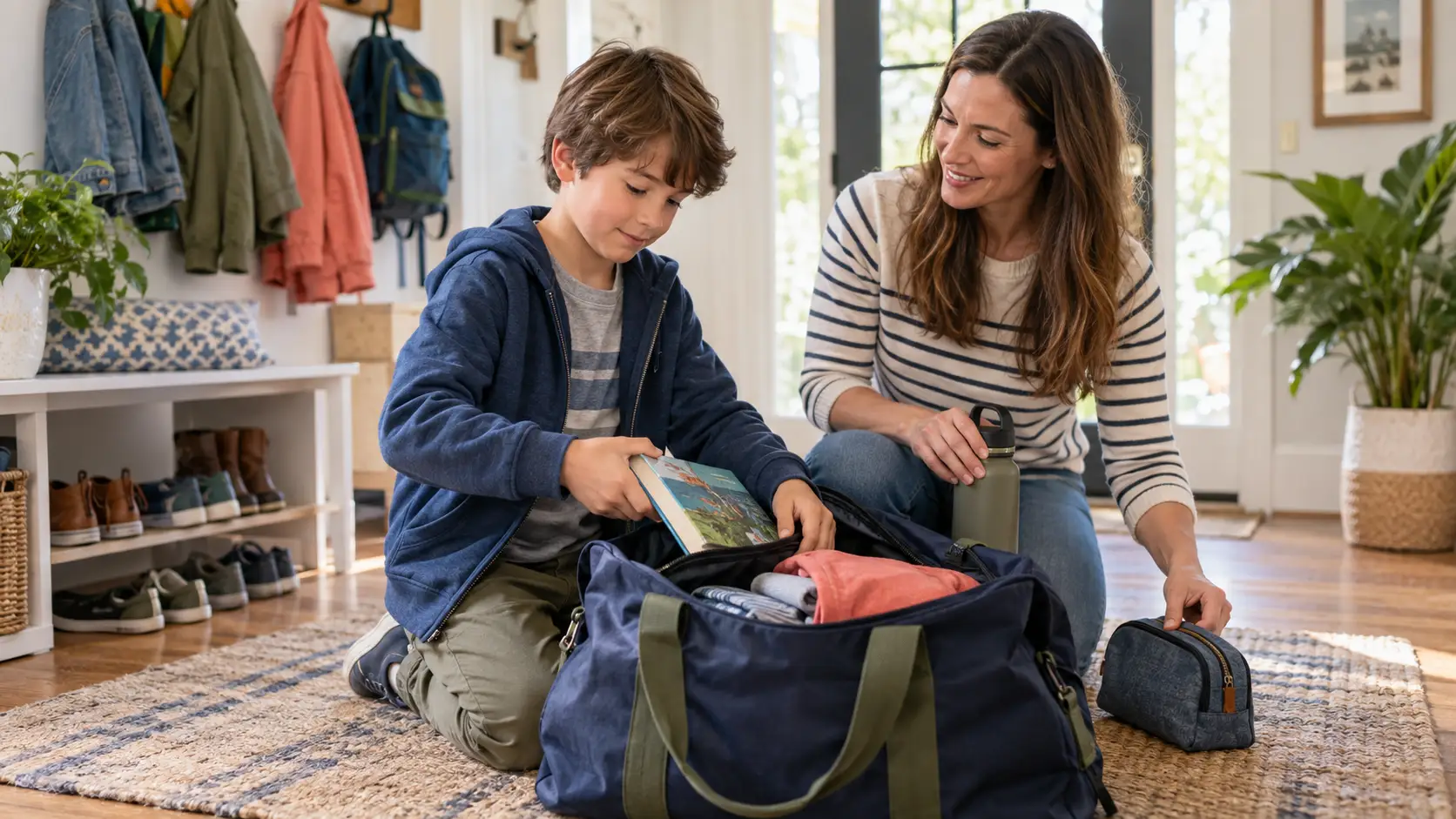
A short evening reset closes the school loop and protects the morning. Children can:
Return completed homework and forms to the backpack.
Charge school-issued equipment in its designated place.
Refill the water bottle when appropriate.
Choose clothes based on weather and activities.
Pack sports, music, or club equipment.
Check the family calendar for changes.
Younger children need a final adult check. Older children can own the checklist and ask for help when something is missing.
Sample after-school schedule for ages 5-8
Time | Routine |
|---|---|
3:15 | Put away school items, wash hands, snack |
3:35 | Outdoor play or quiet decompression |
4:15 | Homework or reading with adult nearby |
4:40 | Feed pet or help prepare the table |
4:50 | Free play until dinner |
Sample after-school schedule for ages 9-12
Time | Routine |
|---|---|
3:30 | Complete arrival reset and make a snack |
3:50 | Movement, friends, or downtime |
4:30 | Homework and school follow-up |
5:15 | Household chore and tomorrow preparation |
5:35 | Free time or dinner help |
Sample routine for activity nights
Practice and lesson days need a smaller routine, not no routine.
Stage | Minimum routine |
|---|---|
Arrive home | Drop school items, eat planned snack, change clothes |
Before leaving | Pack equipment, water, and required items |
After activity | Dinner, essential homework, five-minute reset |
Before bed | Pack school bag and prepare clothes |
Move optional chores to another day. Protect sleep and essential school preparation instead of trying to force a full routine into a compressed evening.
Where should screens fit?
Decide the rule before the child is holding a device. Recreational screens can come after the arrival reset and essential responsibilities, during a defined decompression period, or after dinner. The right placement depends on whether your child can transition away from the activity.
Use a clear endpoint rather than repeated warnings. A timer, the start of dinner, or a scheduled activity is easier to follow than "a little while." If screens consistently block homework, movement, sleep, or family connection, move them later or shorten the window.
How to create an after-school routine chart
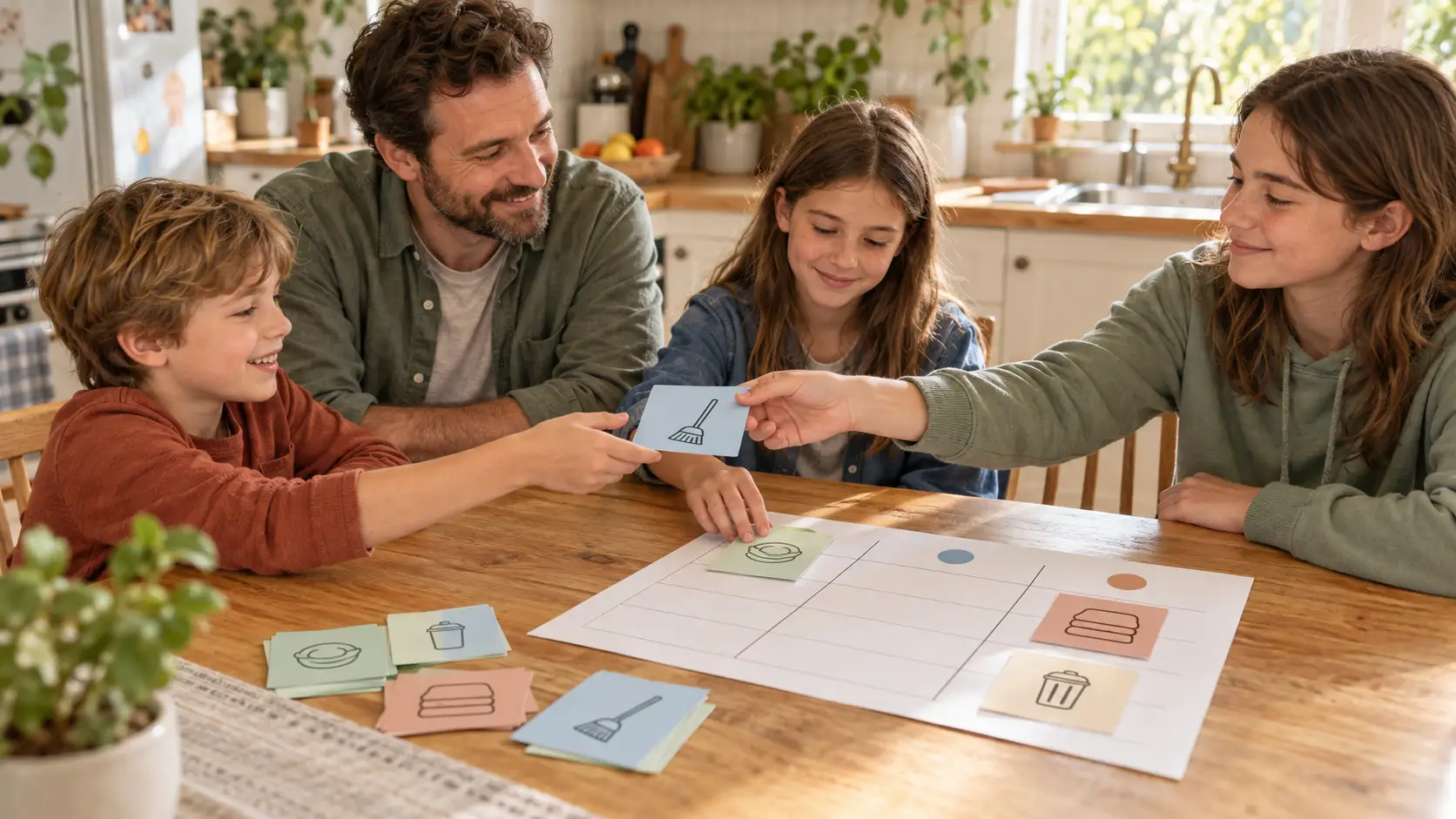
Keep the chart focused on the sequence rather than every minute. Younger children may use photos or icons. Readers can follow a short list:
Backpack, lunchbox, shoes.
Wash hands, snack, water.
Move or rest.
Homework or reading.
Chore.
Pack for tomorrow.
Place the visual where the routine begins. Review it with the child until they can use it without a parent reciting every step.
When the routine is not working
The child melts down immediately: Lower demands at arrival and offer food, water, connection, and quiet first.
Homework starts too late: Shorten decompression, define the start cue, or try homework before play.
The child cannot stop playing: Use a visible timer and a consistent transition activity.
Everything depends on reminders: Move the sequence to a chart, checklist, or scheduled reminder.
Activities derail the evening: Create a separate minimum routine for those days.
The schedule is too crowded: Protect the essentials and remove low-priority tasks.
Siblings need different orders: Keep shared family anchors while allowing individual sequences.
Change one part at a time and test it for a week. A routine needs enough consistency to become familiar, but it should still respond to the actual child and household.
Use Xtra Hands for the repeating responsibilities
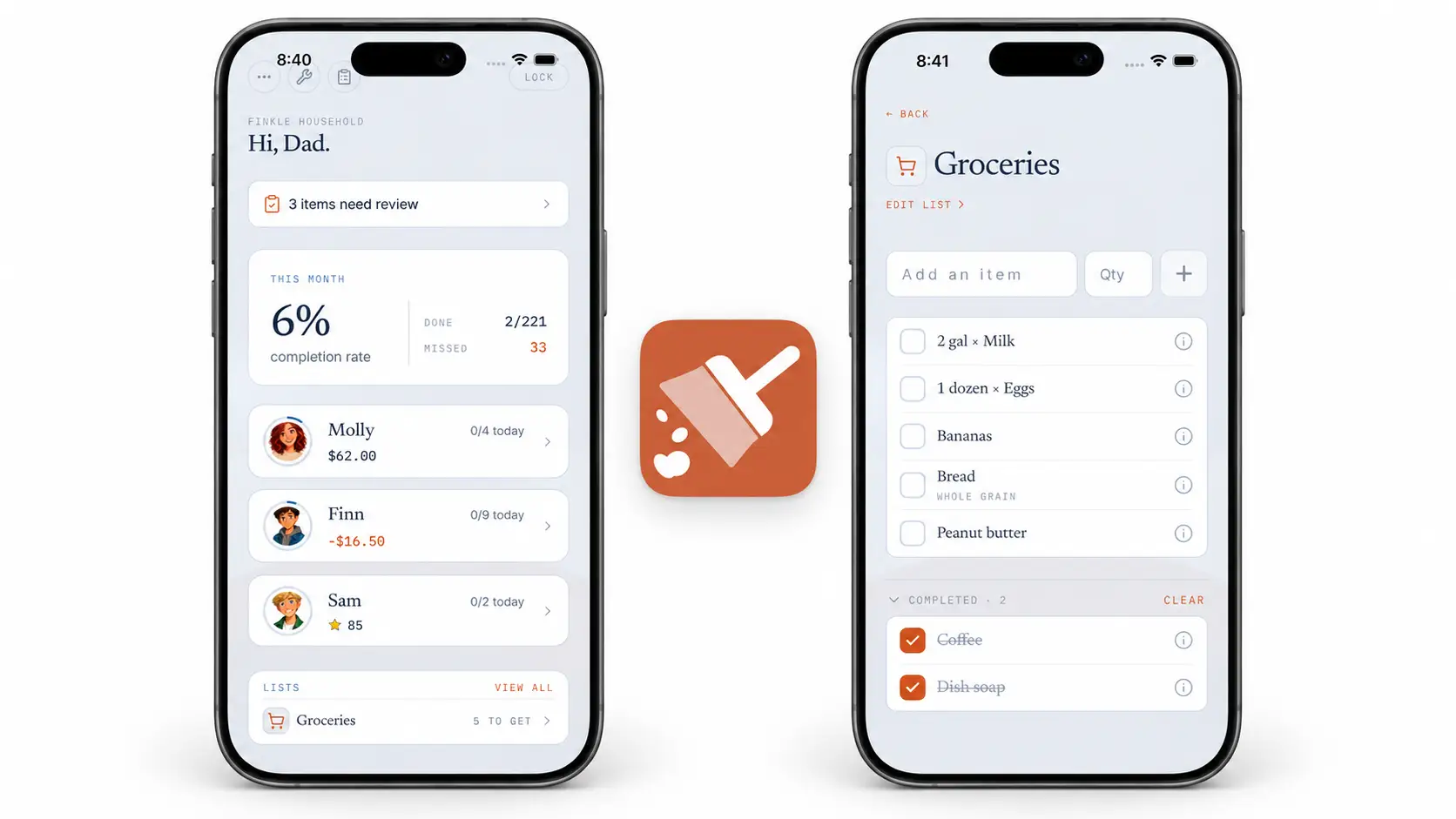
Xtra Hands can carry the tasks that are easy to forget after school: unpacking the lunchbox, feeding a pet, completing a household job, resetting a backpack, or preparing activity gear. Parents can schedule recurring and one-time assignments, use reminders, review completion, and add optional photo proof.
Families can track unpaid responsibilities alongside money, stars, or custom rewards. Xtra Hands syncs across iOS and Android for mixed-device households, and the first member gets every feature free with no trial deadline.
Frequently asked questions
What is a good after-school routine for kids?
A useful routine includes putting away school items, having a snack and water, decompressing, moving, completing homework or reading, helping with one responsibility, and preparing for tomorrow. Adjust the order to the child.
Should kids do homework right after school?
Some children work best immediately, while others need food, movement, or rest first. Choose a regular time and place based on when the child can focus, then keep the start cue consistent.
How long should kids relax after school?
Many families begin with 20 to 40 minutes and adjust. The break should be long enough to help the child reset but contained enough that essential evening responsibilities still fit.
Should chores be part of an after-school routine?
Yes, when the job is short and appropriate for the day's demands. Unpacking a lunchbox, feeding a pet, setting the table, or resetting a backpack can fit naturally. Save demanding weekly work for less crowded days.
How can I stop reminding my child about every step?
Teach the sequence, attach it to predictable cues, and move reminders into a visual chart, checklist, timer, or app. Reduce verbal prompting gradually as the child learns to use the system.
Build a routine that helps the evening breathe
Begin with the transition that causes the most friction. Create a home for school gear, choose the homework window, or add a decompression period. Once that piece is dependable, add the next.
The best after-school routine does not fill every minute. It gives children enough structure to know what comes next and enough breathing room to recover from the day. Use Xtra Hands to organize the responsibilities that repeat.