Age-Appropriate Chores for Kids: A Complete Guide
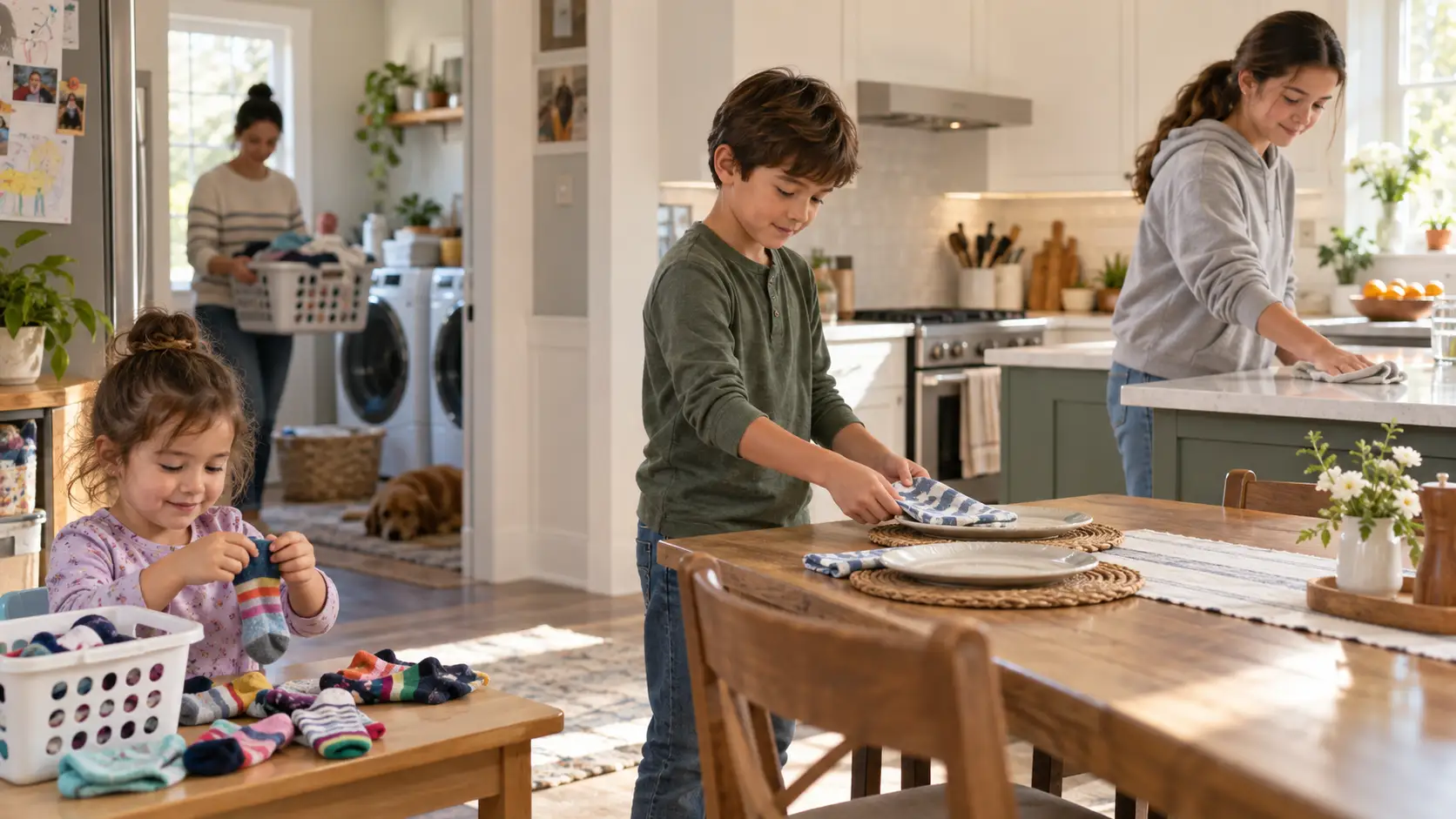
Choosing age-appropriate chores for kids is less about finding the one perfect list and more about matching responsibility to readiness. A four-year-old may proudly sort socks but need help carrying a laundry basket. A ten-year-old may be ready to cook eggs but still need an adult nearby. The right chore is safe, teachable, and just challenging enough to build a new skill.
This guide offers practical chores by age, from toddlers who want to help through teenagers preparing for adult life. Use the ages as a starting point, then adjust for your child's development, experience, attention, and your home's setup.
Age-appropriate chores at a glance
Age | Good chores to start with | Level of help |
|---|---|---|
2-3 | Put away toys, place clothes in hamper, wipe small spills, match socks | Do it together |
4-5 | Make bed, set napkins, clear plastic dishes, water plants, feed pets | Show each step and supervise |
6-7 | Sort laundry, sweep, wipe counters, empty small trash cans, pack backpack | Check after completion |
8-9 | Load dishwasher, vacuum, make snacks, put away groceries, fold laundry | Teach first, then reduce reminders |
10-12 | Change sheets, clean bathroom, do laundry, prepare simple meals, do yard work | Supervise higher-risk tasks |
13-15 | Cook meals, clean the kitchen, mow safely, manage laundry, help with siblings | Set a standard and follow up |
16-18 | Shop for groceries, run errands, maintain a car, plan meals, handle home projects | Coach toward independence |
The American Academy of Pediatrics recommends introducing responsibilities early, adding more as children mature, and praising effort rather than expecting perfection. The goal is not a spotless house. It is a child who gradually learns how to contribute and care for themselves.
Chores for ages 2-3
Toddlers are helpers in training. They often want to imitate adults, but they have limited coordination, a short attention span, and no reliable sense of household danger. Keep chores brief, concrete, and close to you.
Put toys in a basket or bin.
Place dirty clothes in a hamper.
Carry unbreakable items to the table.
Match clean socks.
Put board books on a low shelf.
Wipe a small spill with a cloth.
Help put groceries on a low shelf.
Throw away a tissue or other light trash.
At this age, success may mean the child stayed with the task for one minute. Give one direction at a time: "Put the blocks in this bin" is easier to follow than "Clean the playroom." Expect to finish the job together.
Chores for ages 4-5
Preschoolers can remember short routines and complete simple jobs with supervision. They still need visible steps and realistic standards. A wrinkled bed that they made themselves is more valuable than a perfect bed remade by an adult.
Make the bed by pulling up a comforter.
Set napkins and unbreakable utensils on the table.
Clear their own plastic cup and plate.
Water plants with a small container.
Help measure pet food with an adult.
Pair socks and sort laundry by color.
Dust low, reachable surfaces.
Put shoes, coat, and backpack in their places.
Help carry light groceries.
Picture cues work especially well for children who are not reading yet. Use a photo of the finished toy shelf, a simple drawing, or two or three pictures showing the order of a routine.
Chores for ages 6-7
Early elementary-age children can manage a short checklist and repeat familiar tasks with less help. They may rush or forget steps, so teach what "finished" looks like before expecting independence.
Sort, fold, and put away simple laundry.
Sweep a small floor area.
Wipe the table or counter with a safe cleaner.
Empty bedroom and bathroom wastebaskets.
Set and clear the table.
Make a simple cold snack.
Pack a backpack using a checklist.
Bring in mail with an adult nearby.
Help rake leaves or pull easy weeds.
Refill a pet's water bowl.
Give one or two reliable daily jobs before adding a long weekly list. Consistency builds competence faster than assigning a different job every day.
Chores for ages 8-9
By this stage, many children can complete multi-step chores after being taught and can take ownership of their personal spaces. They are also old enough to understand that shared rooms require shared work.
Load or unload the dishwasher.
Vacuum a room or hallway.
Fold and put away their clothes.
Put away groceries.
Prepare cereal, sandwiches, or other simple foods.
Pack a school lunch.
Take a pet for a walk with appropriate supervision.
Clean a sink and mirror.
Replace toilet paper and restock towels.
Help with meal preparation.
This is a useful age to separate the assignment from the reminder. Instead of repeating "Unload the dishwasher" all afternoon, connect it to a dependable cue: after breakfast, before screen time, or when the child gets home.
Chores for ages 10-12
Tweens can take responsibility for complete household processes, not just isolated steps. A child who has practiced sorting and folding can begin running a load of laundry. One who has helped prep dinner can learn a simple meal.
Change bedsheets.
Wash, dry, fold, and put away laundry.
Clean a bathroom using approved products.
Clean the kitchen after a meal.
Prepare a simple meal with supervision.
Wash the car.
Take trash and recycling to collection bins.
Do basic yard work.
Organize a closet or pantry shelf.
Watch a younger sibling briefly while an adult remains at home.
Introduce appliances and cleaning products one at a time. Review labels, food safety, sharp tools, hot surfaces, and what to do if something goes wrong. Readiness matters more than whether a friend the same age is already doing the job.
Chores for ages 13-15
Teenagers need chores that prepare them for the practical work of adulthood. They can manage larger areas and recurring responsibilities, but school, sleep, sports, and other commitments still matter. The answer is a reasonable workload, not no household role at all.
Plan and cook a family meal.
Clean the kitchen from start to finish.
Handle their own laundry on a schedule.
Vacuum and mop shared rooms.
Mow, shovel snow, or do seasonal yard work when safely trained.
Wash and vacuum the family car.
Help care for younger siblings with clear boundaries.
Manage pet feeding, exercise, and cleanup.
Help create a grocery list and compare prices.
Complete basic home maintenance, such as changing batteries.
The AAP's guidance on household chores for teens emphasizes both life skills and teamwork. Caring for shared spaces teaches that work inside the home has value, even when life outside the home is busy.
Chores for ages 16-18
Older teens are close to living more independently. Their responsibilities should include planning, noticing what needs attention, and completing a task without being managed through every step.
Plan meals and shop from a budgeted list.
Run family errands when licensed and permitted.
Cook several complete meals.
Clean the refrigerator or oven safely.
Maintain their room, laundry, and bathroom.
Schedule or help arrange routine appointments.
Track household supplies and add needed items to a list.
Perform basic car care, such as checking tire pressure.
Handle a larger seasonal cleaning project.
Contribute to family caregiving within agreed limits.
For more detail on expectations, workload, and motivation at this stage, see our complete guide to chores for teenagers.
How to tell if a chore is truly age-appropriate
A list can suggest possibilities, but your child and home determine the final answer. Before assigning a chore, ask:
Is it safe? Consider chemicals, heat, blades, electricity, heavy objects, pets, traffic, and outdoor equipment.
Can my child reach and operate what they need? A task is not independent if the setup itself requires unsafe climbing.
Can I explain the task in a few clear steps? If not, divide it into smaller jobs.
Have they practiced with me? Familiarity changes what a child can manage.
Can they notice or report a problem? A child using an appliance should know when to stop and ask for help.
Is the standard realistic? Expect improvement over time, not adult-level speed or precision on day one.
Children with ADHD, learning differences, motor challenges, anxiety, or other needs may benefit from smaller steps, visual instructions, body doubling, timers, or more practice. That is an adjustment to the teaching method, not a reason to exclude them from meaningful contribution.
Teach chores with "I do, we do, you do"
Many chore conflicts begin when adults assign a result that children have never been shown how to produce. Treat each new chore like any other skill.
I do: Demonstrate the task slowly. Name the important steps and the safety rules.
We do: Complete it together. Let your child perform as many steps as they can while you coach.
You do: Let them try independently, then check the agreed standard.
We review: Give specific feedback and reteach one step if needed.
For example, "clean the bathroom" may mean put away toiletries, spray the sink, wipe the mirror, scrub the toilet, replace towels, and sweep. Write the steps down until the sequence becomes familiar.
The American Academy of Child and Adolescent Psychiatry advises families to set clear expectations, establish regular routines, model the work, and give positive feedback. It also reminds parents that chores are learned skills. Needing another round of help often means a child is still learning, not refusing responsibility.
How many chores should a child have?
There is no universal number. A better measure is whether the workload is consistent, manageable, and compatible with school, sleep, play, and family life.
A simple starting point is:
Preschoolers: one or two tiny jobs done alongside an adult.
Elementary-age children: one or two daily responsibilities plus a weekly job.
Tweens: personal responsibilities plus one or two shared household jobs.
Teens: ownership of personal care tasks and meaningful contributions to shared spaces, meals, pets, or yard work.
Start smaller than you think you need to. Add responsibility after the current routine becomes dependable. A short list completed consistently teaches more than an ambitious chart the family abandons after four days.
Should kids be paid for chores?
Families take several reasonable approaches. Some treat all chores as unpaid contributions. Others attach allowance to a standard list. A hybrid system keeps basic responsibilities unpaid and offers money or points for optional jobs beyond the baseline.
The important part is clarity. Children should know before they begin whether a job is expected, paid, or eligible for another reward. Our guide to paying kids for chores walks through the tradeoffs and includes a practical hybrid model.
Common mistakes that make chores harder
Starting with too much. Introduce one new responsibility at a time.
Using vague assignments. Replace "clean up" with a clear action and finish line.
Expecting a skill that was never taught. Demonstrate before you delegate.
Correcting every imperfection. Protect safety and hygiene, but leave room for a child's work to look like a child's work.
Reminding constantly. Connect chores to routines, checklists, or notifications so the parent is not the only cue.
Doing the chore after resistance. Calm follow-through teaches more than taking the job back.
Keeping the same list forever. Retire mastered chores and introduce skills your child will need next.
If repeated reminders are wearing everyone down, use the practical scripts and routine changes in How to Get Kids to Do Chores Without Nagging.
Build a system the whole family can follow
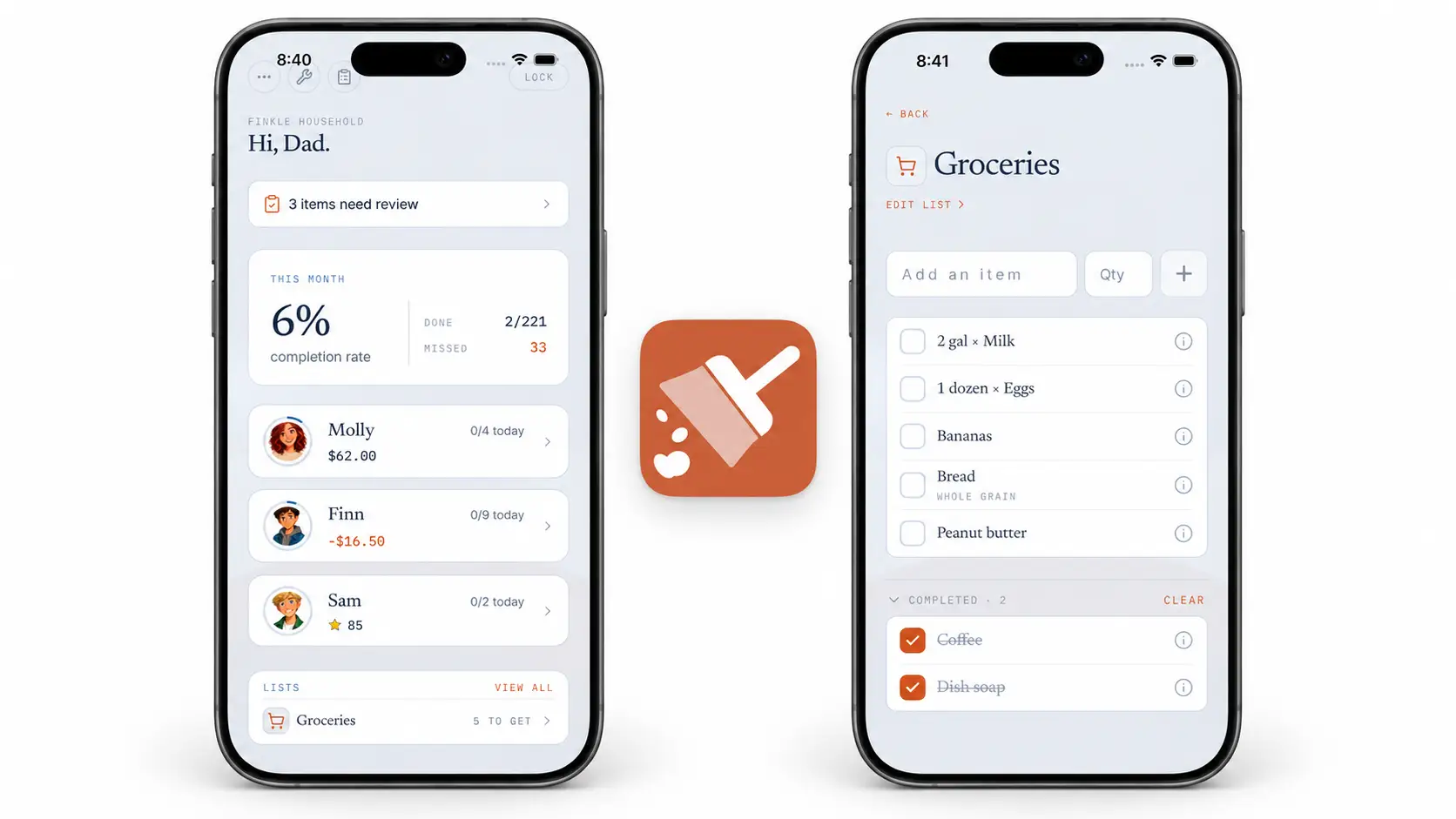
The best chore list still needs a reliable home. A paper chart works well when everyone sees the same spot every day. A chore app becomes useful when assignments recur on different schedules, rotate among siblings, need parent approval, or must stay visible across locations.
Xtra Hands lets families manage expected chores, paid jobs, stars, custom rewards, reminders, approvals, and optional photo proof in one household. It also syncs across iOS and Android, so a mixed-device family can share the same system instead of splitting responsibilities between platforms.
Start with the jobs your child can already do, then add one skill worth learning. One member can use every Xtra Hands feature free with no trial deadline, making it easy to build the routine before inviting the rest of the household.
Frequently asked questions
What age should children start doing chores?
Many children can begin helping around age two or three with simple tasks such as putting away toys or placing clothes in a hamper. At that age, chores are short learning activities completed with an adult, not independent household labor.
What chores can a five-year-old do?
Many five-year-olds can make a simple bed, set napkins, clear an unbreakable dish, sort socks, water plants, put away toys, and help feed a pet. The exact task should match the child's coordination, experience, and your home's safety setup.
What chores should a ten-year-old do?
A ten-year-old may be ready to change sheets, do laundry with instruction, clean a bathroom, load the dishwasher, take out trash, prepare a simple meal with supervision, and help with yard work. Teach appliance and product safety before expecting independence.
Should siblings have the same number of chores?
Fair does not always mean identical. Responsibilities can reflect age, available time, ability, and task difficulty. Explain the reasoning, rotate unpopular jobs when possible, and review the arrangement as children grow.
What if my child cannot complete an age-listed chore?
Break the task into smaller steps, demonstrate it again, change the tools, or provide more supervision. Age ranges describe common possibilities, not a deadline. If difficulties with everyday responsibilities also appear across school or other settings and concern you, discuss them with your child's pediatrician.
How often should chore assignments change?
Keep assignments stable long enough for children to build competence. Review them every few months, at a change of season, or when a chore has become effortless. Add responsibility gradually instead of rebuilding the whole system each week.
Final take
Age-appropriate chores should grow with a child. Begin with participation, teach each skill, keep the standard realistic, and increase independence as competence develops. The finished floor or folded towel matters, but the larger win is a child learning that they are capable and that their contribution matters.
Start free with Xtra Hands and turn your family's chore list into a routine everyone can see and follow.