How to Make Chores Fun for Kids: 15 Practical Ideas
Wondering how to make chores fun for kids without turning every clean sock into a major production? The answer is not constant prizes or pretending that wiping a table is a trip to an amusement park. It is adding just enough choice, movement, connection, or challenge to make starting easier.
Fun can help children practice new skills and build positive associations with family work. The long-term goal, however, is responsibility: children who can contribute even when a job is ordinary. These 15 practical ideas strike a balance between the two.
Quick answer
To make chores more fun, give children limited choices, use short timers, play music, work alongside them, create simple challenges, and make progress visible. Match the approach to the child's age and personality. Use games to help with task initiation and learning, then gradually reduce the entertainment as the routine becomes familiar.
1. Let kids choose between two chores
Choice gives children a sense of control without making the household workload optional. Instead of asking, "Do you want to help?" offer two acceptable paths:
Would you rather unload the dishwasher or wipe the table?
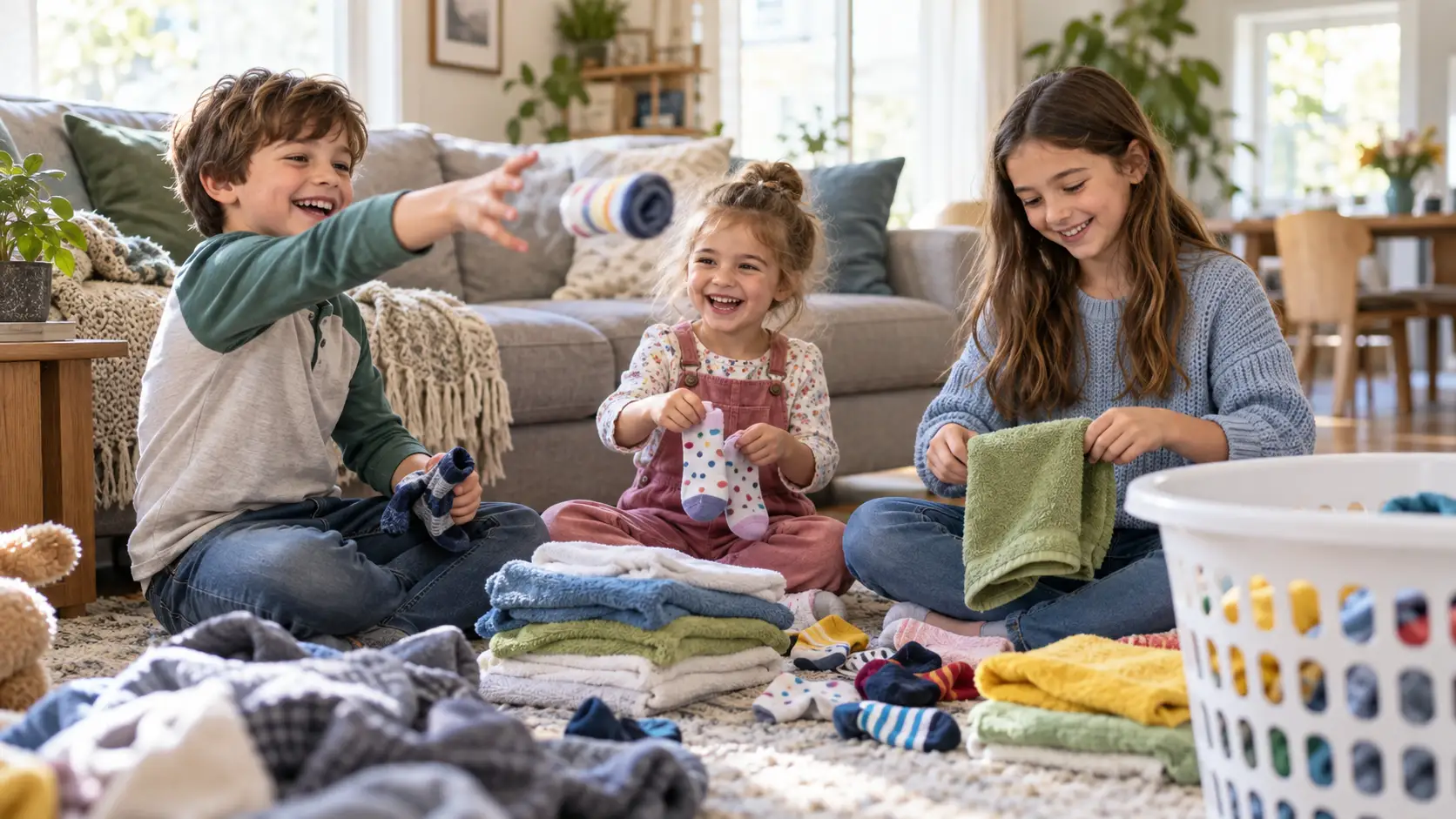
Do you want to fold towels or match socks?
Would you rather vacuum before lunch or after lunch?
Keep the choices real and limited. Offering six jobs can create decision fatigue, while offering a fake choice invites an argument.
2. Race the clock, not each other
Set a short timer and see how much the family can complete before it rings. The challenge should be against the clock, not between siblings whose ages and abilities differ.
Good timer challenges include:
A two-minute toy pickup.
A five-minute bedroom reset.
A ten-minute whole-family tidy.
Finishing the after-dinner jobs before one song playlist ends.
Speed never outranks safety or the agreed standard. Do not race with glass, hot surfaces, cleaning products, stairs, sharp tools, or outdoor equipment.
3. Turn on a family cleanup playlist
Music creates a clear beginning and end, adds energy, and makes repetitive tasks less dull. Let children take turns choosing the cleanup song or build a shared playlist.
Use the same music regularly if you want it to become a routine cue. When the first song starts, everyone knows it is time to begin. When the last song ends, the work session is over.
4. Play the color cleanup game
This works especially well for toddlers and preschoolers. Name one color and ask the child to find and put away objects of that color. Move through several colors until the area is manageable.
You can use the same idea with shapes, categories, or locations:
Find everything with wheels.
Collect all the books.
Put away five soft things.
Find everything that belongs in the bedroom.
The game turns a vague instruction like "clean this mess" into one concrete search at a time.
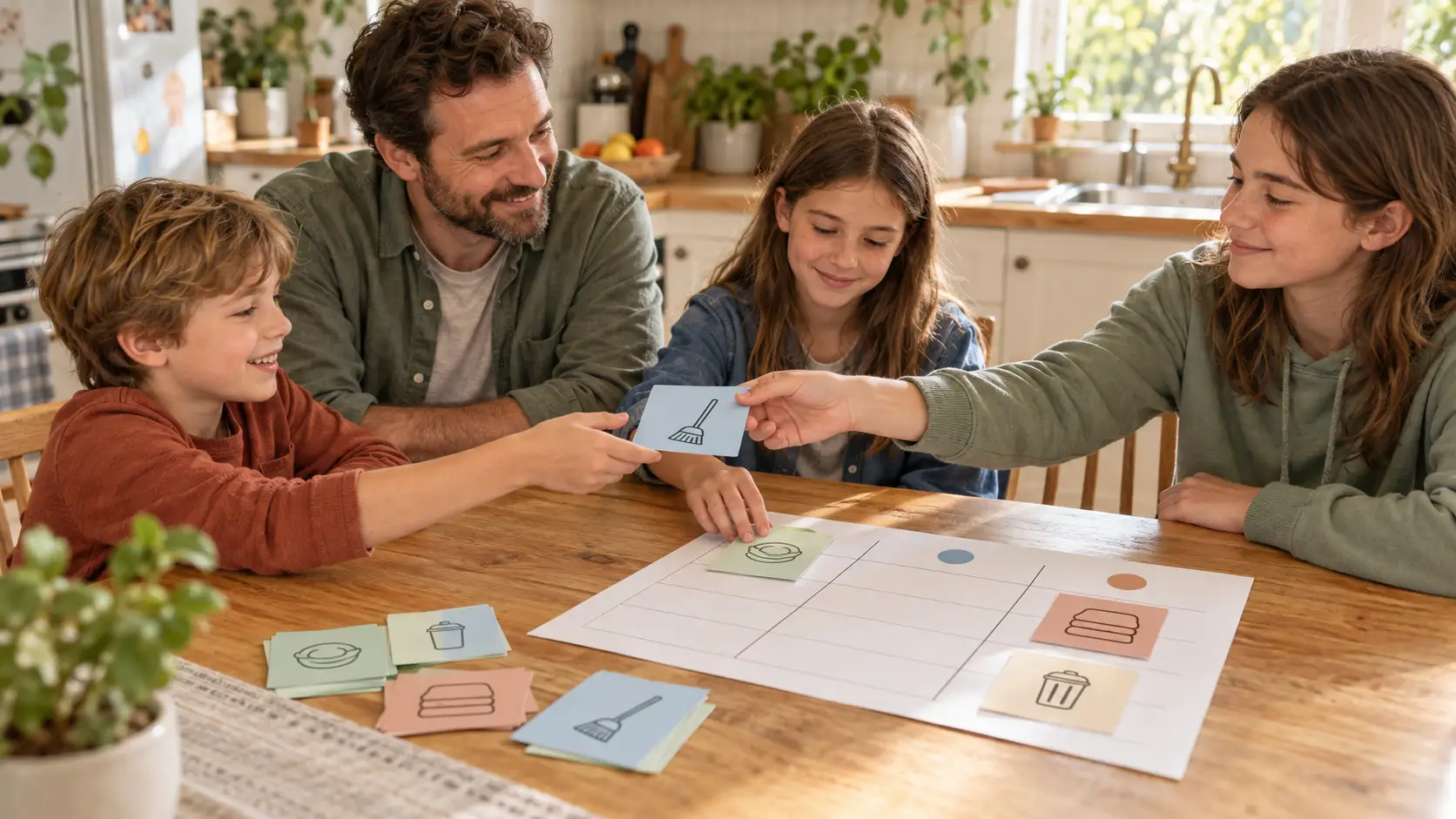
5. Use mystery chore cards
Write several short, age-appropriate jobs on cards and place them face down. Each family member draws one, completes it, and draws again until the stack is gone.
Mystery works best when the tasks are roughly equal in time and difficulty. Keep unsafe or skill-specific jobs out of the random pile. A preschooler should not accidentally draw "clean the oven," and one person should not pull a twenty-minute bathroom job while everyone else gets a two-minute task.
6. Make cleaning a scavenger hunt
Give younger children a short list of objects to rescue from the wrong place:
Three books.
Two cups.
Five blocks.
One pair of shoes.
For older children, use clues tied to the actual job: "Find four things in this room that belong somewhere else" or "Find the three surfaces that collect the most clutter." Keep the hunt focused enough that it speeds up cleaning instead of becoming a new activity to manage.
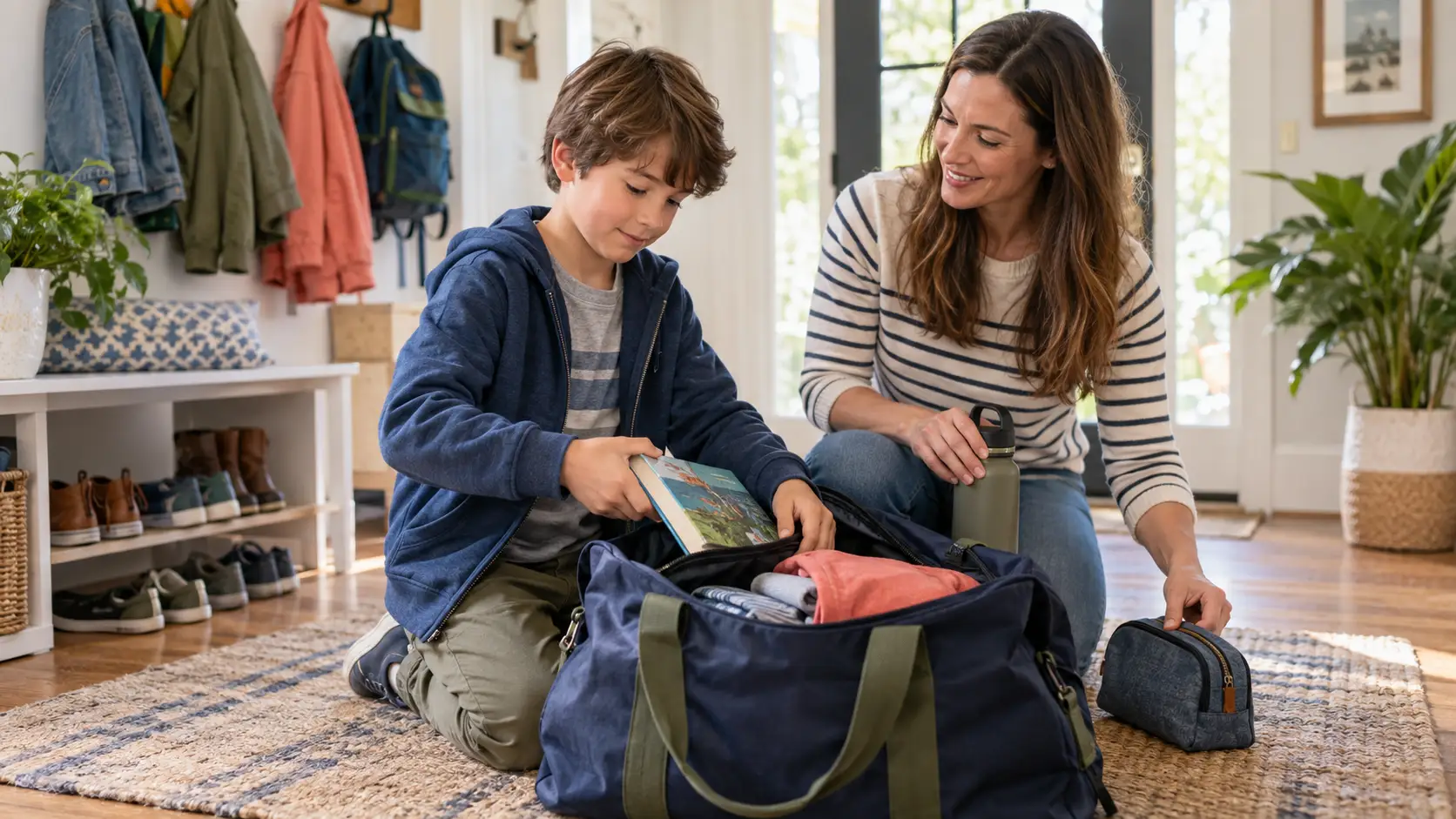
7. Work side by side
Children often start more easily when someone else is working nearby. Fold laundry together, clean opposite sides of the kitchen, or give everyone a zone during a family reset.
Side-by-side work provides connection and modeling without the parent taking over. It can be especially helpful when a child understands the chore but struggles to begin or stay with it.
8. Add a silly role or mission
Imaginative framing can make familiar work feel new for younger children. The child can be:
A delivery driver returning objects to their homes.
A detective finding everything that does not belong.
A restaurant helper setting the table for important guests.
A laundry scientist sorting colors and fabrics.
A room inspector checking a short completion list.
Keep the story light. The chore should still have a visible finish line and should not require twenty minutes of setup before two minutes of work.
9. Create levels for multi-step chores
Large tasks feel easier when children can see progress. Divide a bedroom reset into levels:
Level one: clothes in the hamper.
Level two: books on the shelf.
Level three: toys in bins.
Final level: clear the walkway and make the bed.
This approach works well for children who freeze when they hear "clean your room." Each level gives attention one target and creates a quick success before the next step.
10. Use points, stars, or streaks thoughtfully
Visible progress can make repetition satisfying. A child might collect stars toward choosing Friday dinner, points toward a family outing, or a streak for completing a morning routine independently.
Keep the system understandable:
State exactly which actions earn progress.
Use rewards the child actually values.
Make the goal reachable in a reasonable time.
Do not remove previously earned points as punishment.
Review the system when motivation fades.
Our guide to building a chore reward system that works explains how to choose rewards without making every family contribution transactional.
11. Let kids design family rewards
Rewards do not need to be toys or money. Ask children to help create a menu of privileges and experiences, such as:
Choose the family movie.
Pick dessert.
Select the music in the car.
Stay up fifteen minutes later on Friday.
Choose a board game.
Plan a family walk or park visit.
Pick what everyone cooks together.
Children are more invested in a system when they helped choose what progress leads to.
12. Try a family beat-your-best challenge
Record how long a safe, repeatable family task takes, then try to improve the process next time. The goal is teamwork and smoother coordination, not frantic speed.
For example, the family might try to finish the after-dinner reset with fewer reminders than yesterday or put away a basket of clean laundry before three songs finish. Celebrate better cooperation as much as a faster time.
13. Hide a tiny surprise in the work
Occasionally place a joke, encouraging note, sticker, or clue where a child will find it while completing a routine chore. A note can wait beneath the stack of clean towels or inside an empty toy bin.
Use this as a pleasant surprise, not an expectation attached to every task. The unpredictability is what makes it delightful.
14. Pair a disliked chore with something enjoyable
Older children and teens may prefer listening to music, an audiobook, or a podcast while folding laundry, washing a car, or cleaning their room. Pairing an ordinary task with enjoyable audio can reduce the friction of getting started.
The chore still needs enough attention to be safe and complete. Skip headphones around traffic, power equipment, cooking hazards, or any situation where the child needs to hear instructions.
15. End with a visible before-and-after
Children may not notice gradual progress while they work. Pause at the end and name the result: the table is ready for dinner, the floor has room to play, or tomorrow's clothes are clean and put away.
Specific feedback connects effort with impact. Try, "You sorted that whole basket, so everyone can find clean socks tomorrow," instead of a generic "Good job."
The American Academy of Pediatrics recommends praising effort rather than expecting perfection. Children are learning household skills over time, and small accomplishments prepare them for larger responsibilities.
How to make chores fun at different ages
Age | Motivation that often fits | Examples |
|---|---|---|
2-5 | Imitation, movement, imagination, immediate praise | Color hunts, delivery missions, cleanup songs |
6-8 | Clear wins, simple games, visible progress | Timers, mystery cards, stars, chore levels |
9-12 | Choice, competence, challenges, meaningful rewards | Beat-your-best, points, choosing jobs, family goals |
13+ | Autonomy, fairness, flexible timing, real-life relevance | Music, job trades, paid extras, ownership of a full task |
Need ideas that match your child's skills? Use our complete list of age-appropriate chores for kids.
Fun should help the routine, not replace it
Games are most useful when a child is learning, resisting the starting point, or facing an unusually dull family cleanup. They become less useful when a child refuses any task that lacks a prize, competition, or performance.
Keep these boundaries:
Some chores are expected because everyone contributes.
The task still needs a clear standard.
Safety rules do not change for a game.
Children are not required to feel cheerful while helping.
Parents do not need to invent new entertainment every day.
As a routine becomes familiar, simplify it. A game may become a timer, then a checklist, and eventually a habit completed without either.
What if games and rewards do not work?
Look beneath the resistance. A child may not understand the task, may see it as too large, may be exhausted or overscheduled, or may have learned that enough delay makes an adult complete the work.
Ask:
Was the chore taught step by step?
Is it safe and developmentally appropriate?
Does the child know when it must be done?
Is the finish line specific?
Is the workload reasonable?
Is follow-through calm and consistent?
The American Academy of Child and Adolescent Psychiatry encourages clear expectations, regular routines, modeling, manageable tasks, and positive feedback. If conflict remains intense across everyday responsibilities at home and in other settings, consider discussing the pattern with your child's pediatrician.
For scripts and consequences that do not depend on repeated reminders, read How to Get Kids to Do Chores Without Nagging.
Use Xtra Hands to make progress visible
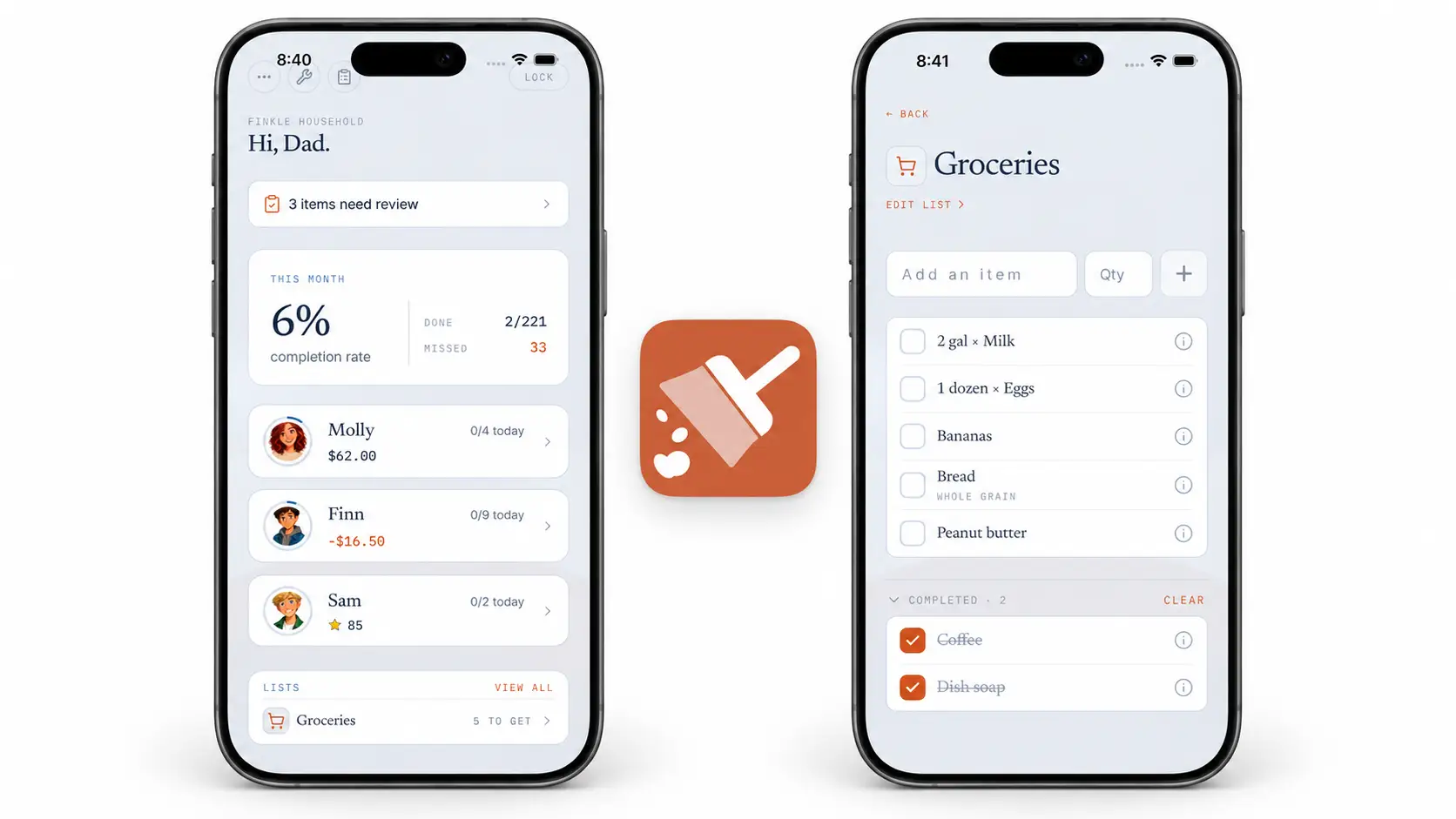
Xtra Hands lets families mix ordinary responsibilities with stars, money, and custom rewards. Children can see their assigned work and progress, while parents can use reminders, approvals, and optional photo proof without becoming the household's only tracking system.
The same family can participate across iOS and Android devices. One member receives every feature free with no trial deadline, so you can build the routine and test what motivates your child before inviting the rest of the household.
Frequently asked questions
How do I make cleaning fun without rewards?
Use music, limited choices, short timers, family work sessions, imaginative roles, scavenger hunts, and visible before-and-after results. These approaches change the experience without offering a prize for every task.
Are chore games good for older kids?
Older children may prefer autonomy over pretend play. Let them choose timing, listen to audio, trade comparable jobs, beat a personal best, or work toward a shared family goal.
Should siblings compete over chores?
Usually, cooperative challenges are safer and fairer. Siblings of different ages may work at different speeds, and direct competition can reward rushing. Have the family race the clock or improve its shared result instead.
How long should a chore session last?
Match the session to age and attention. A preschool cleanup may last a few minutes, while an older child can handle a longer complete task. Short, defined work periods are often easier to start than open-ended cleaning.
Will making chores fun stop children from learning responsibility?
Not if fun supports the work instead of making it optional. Games can help children begin and practice. Gradually reduce the extra structure as the chore becomes a familiar responsibility.
Final take
You do not need to make every chore exciting. Add enough choice, connection, movement, or visible progress to lower the resistance, then let repetition build the habit. The best idea is the one that helps your child begin, learn, and eventually contribute without needing a show.
Start free with Xtra Hands and create a chore system with rewards your family will actually enjoy using.