Chores for 9-12 Year Olds: 35 Jobs That Build Independence

Chores for 9-12 year olds should begin moving from isolated steps to complete life skills. A nine-year-old might fold and put away laundry after an adult runs the machine. By eleven or twelve, that same child may be ready to sort, wash, dry, fold, and store a full load with less supervision.
The tween years are ideal for teaching the household skills children will need as teenagers and adults. This guide includes 35 age-appropriate jobs, divided into ages 9-10 and 11-12, along with realistic schedules, safety limits, and ways to build independence without overwhelming the week.
Quick list: good chores for tweens
Load and unload the dishwasher.
Prepare simple meals and school lunches.
Vacuum, sweep, and mop.
Clean a bathroom.
Wash, dry, fold, and put away laundry.
Change bedsheets.
Take out trash and recycling.
Care for pets.
Put away groceries and track supplies.
Help with yard work.
Wash the car.
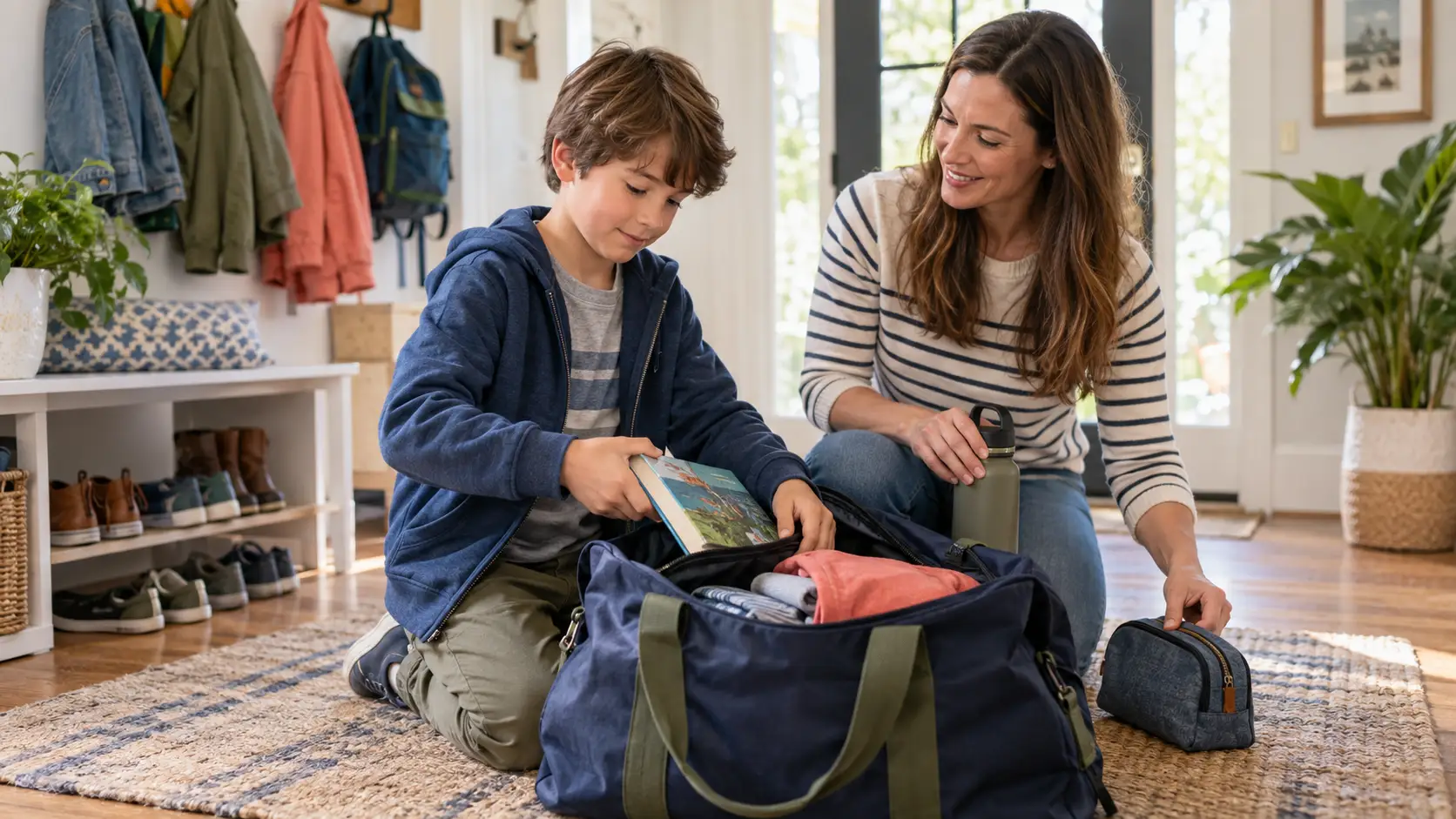
Manage school and activity gear.
The American Academy of Pediatrics recommends chores such as vacuuming, meal help, snacks, pet walking, groceries, and laundry for ages eight to ten. Its guidance for ages eleven to twelve adds cleaning kitchens and bathrooms, changing sheets, completing laundry, washing the car, and cooking simple meals with supervision.
15 chores for 9-10 year olds
Children ages nine and ten can often manage familiar multi-step jobs after instruction. They still need adult decisions around chemicals, heat, knives, heavy objects, and unsupervised outdoor work.
Load and unload the dishwasher. Keep sharp, fragile, and heavy items with an adult.
Vacuum a bedroom or shared room. Teach cord, stair, and furniture safety first.
Fold and put away personal laundry. Agree on a realistic folding standard.
Prepare a school lunch. Provide a simple formula for protein, produce, snack, and drink.
Make a cold breakfast or snack. Try cereal, yogurt, toast with supervision, or a sandwich.
Take out household trash and recycling. An adult should check for hazardous contents.
Wipe kitchen counters and table. Use only approved products and cloths.
Sweep and use a simple floor mop. Define one room or zone.
Clean a bathroom sink and mirror. Teach the exact sequence and supplies.
Put away groceries. Assign pantry, refrigerator, and household-supply zones.
Manage daily pet care. Feed, refill water, walk safely, or clean a simple habitat.
Change pillowcases and strip the bed. Build toward a complete bedding change.
Rake leaves or pull weeds. Give the child a defined outdoor area.
Organize a drawer, shelf, or backpack. Set rules for items needing adult review.
Help prepare dinner. Wash produce, measure, mix, and handle safe preparation steps.
At this stage, children can begin noticing what a routine needs. Instead of saying "put your lunchbox away" each afternoon, teach a complete arrival routine: unpack the lunchbox, place papers in the parent-review spot, hang the backpack, and prepare anything needed tomorrow.
20 chores for 11-12 year olds
Older tweens can take ownership of complete household processes, but competence should be demonstrated before supervision decreases. A child who has never used a washing machine needs instruction regardless of age.
Run a full load of personal laundry. Sort, measure detergent, select settings, dry, fold, and put away.
Change all bedding. Strip the bed, replace sheets and pillowcases, and start the wash.
Clean a bathroom. Follow a checklist for sink, mirror, toilet, towels, and floor.
Clean the kitchen after a meal. Store food, load dishes, wipe surfaces, and sweep.
Cook a simple meal with supervision. Try pasta, eggs, soup, tacos, or another practiced family meal.
Plan one dinner side dish. Check ingredients, prepare it, and help serve.
Wash and vacuum the car. Keep the vehicle parked and keys controlled by an adult.
Mop a shared floor. Learn the correct amount of water and safe walking path.
Deep-clean a bedroom. Dust, vacuum, change bedding, empty trash, and reset surfaces.
Manage pet care for a full day. Include food, water, exercise, and cleanup.
Take bins to the curb with supervision. Consider weight, traffic, weather, and local setup.
Make and follow a grocery list for one recipe. Check what is already available first.
Restock household supplies. Notice low paper products, soaps, or pantry staples and add them to a list.
Organize and donate outgrown belongings. Let an adult approve final donations.
Do seasonal yard work. Rake, weed, spread mulch, or shovel light snow with safe tools.
Clean refrigerator shelves. Work one shelf at a time with guidance on food safety.
Care for younger siblings briefly. An adult should remain at home and set clear boundaries.
Prepare school and activity equipment. Clean, pack, and check supplies before they are needed.
Handle a weekly household zone. Own the entryway, family room, pet station, or another defined area.
Help complete a basic home project. Assemble, organize, paint, or repair under direct adult instruction.
The American Academy of Child and Adolescent Psychiatry identifies changing sheets, cleaning kitchens or bathrooms, and yard work as possible responsibilities around ages ten and eleven. It emphasizes that these are learned skills; returning to help usually means a child needs more practice, not that they are incapable.
Chores by skill area
Skill area | Useful tween responsibilities |
|---|---|
Self-management | Laundry, bedding, room care, backpack, school supplies |
Food | Pack lunch, prepare snacks, help cook, clean after meals |
Cleaning | Vacuum, mop, dust, bathroom care, kitchen reset |
Family contribution | Pet care, dishes, trash, groceries, supply tracking |
Outdoor work | Rake, weed, wash car, light snow removal, bin day |
Planning | Recipe list, schedule preparation, donation sorting, household zone |
How many chores should a tween have?
There is no universal number. A practical baseline might include:
Responsibility for personal belongings and room.
One short daily contribution to a shared space.
One or two larger weekly household jobs.
Count time, effort, school demands, sleep, sports, and other commitments. Three ten-minute chores may be more manageable than one undefined job that consumes Saturday morning.
Being busy should shape the schedule, not remove family contribution entirely. A demanding practice night can carry only the daily baseline, while a larger task fits another day.
Sample weekly schedule for ages 9-10
Frequency | Example assignment |
|---|---|
Daily | Manage bedroom floor, hamper, and backpack |
After dinner | Load dishwasher and wipe table |
Tuesday | Take out trash and recycling |
Thursday | Vacuum one shared room |
Saturday | Fold and put away personal laundry |
Sample weekly schedule for ages 11-12
Frequency | Example assignment |
|---|---|
Daily | Manage personal space, school items, and pet's evening care |
Monday | Run and put away one load of laundry |
Wednesday | Prepare one part of dinner |
Friday | Clean bathroom |
Sunday | Change sheets and prepare for the school week |
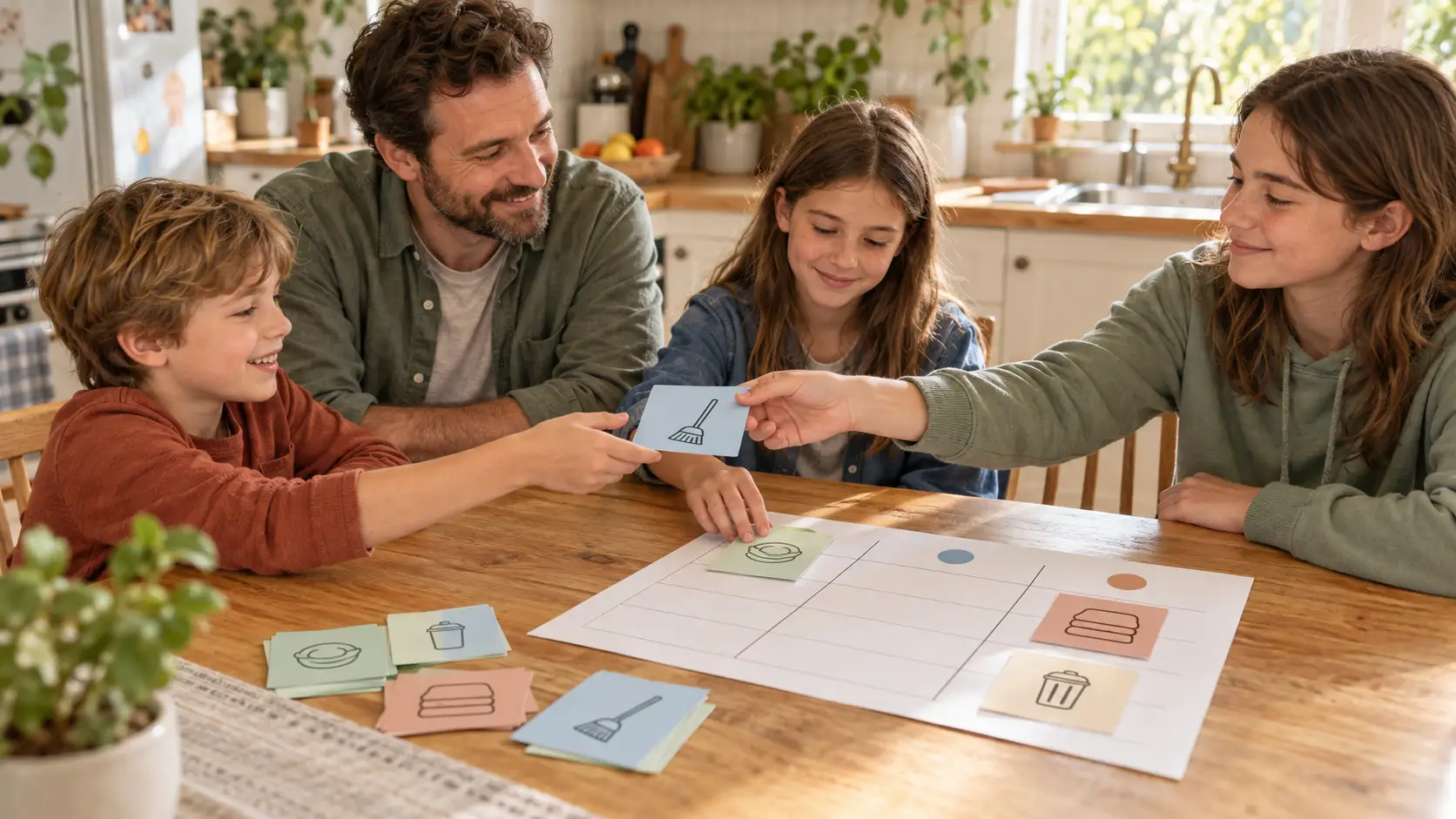
Keep assignments stable long enough for mastery. Use our weekly chore schedule guide to balance fixed jobs, rotations, and one-time work.
Move from reminders to ownership
Tweens are capable of more independence, but adults often remove support too quickly. Transfer responsibility in stages:
Teach: Demonstrate every step and safety decision.
Practice: Complete the process together several times.
Prompt: Let the child lead using a checklist.
Review: Check the finished result and reteach one issue.
Own: The child notices the schedule, completes the work, and reports problems.
Ownership does not mean silence from the parent forever. It means the reminder becomes the schedule, checklist, or routine rather than repeated personal prompting.
Safety rules for tween chores
Age alone does not make a task safe. Before reducing supervision, confirm that the child can use the equipment, recognize a problem, stop, and ask for help.
Teach labels and safe handling before allowing cleaning products.
Introduce knives, stoves, ovens, and hot liquids one skill at a time.
Review food storage, handwashing, and cross-contamination.
Keep lawn mowers, power tools, and heavy equipment with trained adults.
Consider traffic and visibility before curb, mail, or dog-walking duties.
Set clear limits for sibling care and keep an adult present at home.
Do not assign lifting that requires straining or unsafe stairs.
Should tweens get paid for chores?
Ages nine through twelve are well suited to learning about earning, saving, and spending. Families can keep basic contributions unpaid, connect allowance to a chore list, or use a hybrid model with optional paid jobs.
Good extra jobs might include washing the car, organizing a storage area, doing additional yard work, or completing a project beyond the regular schedule. Define the rate and standard before work begins.
Our guides to paying kids for chores and allowance by age can help you choose a consistent model.
When a tween says chores are unfair
Ask what feels unfair: the time, difficulty, frequency, timing, or comparison with a sibling. That turns a broad complaint into something the family can evaluate.
Compare effort rather than the number of tasks.
Rotate unpopular but comparable shared jobs.
Adjust around unusually demanding school or activity days.
Let siblings trade with agreement and clear ownership.
Keep personal responsibilities appropriate to each child's needs.
Fair does not mean identical. An older child may handle a more complex process, while a younger sibling completes a shorter but equally dependable contribution.
Use Xtra Hands as independence grows
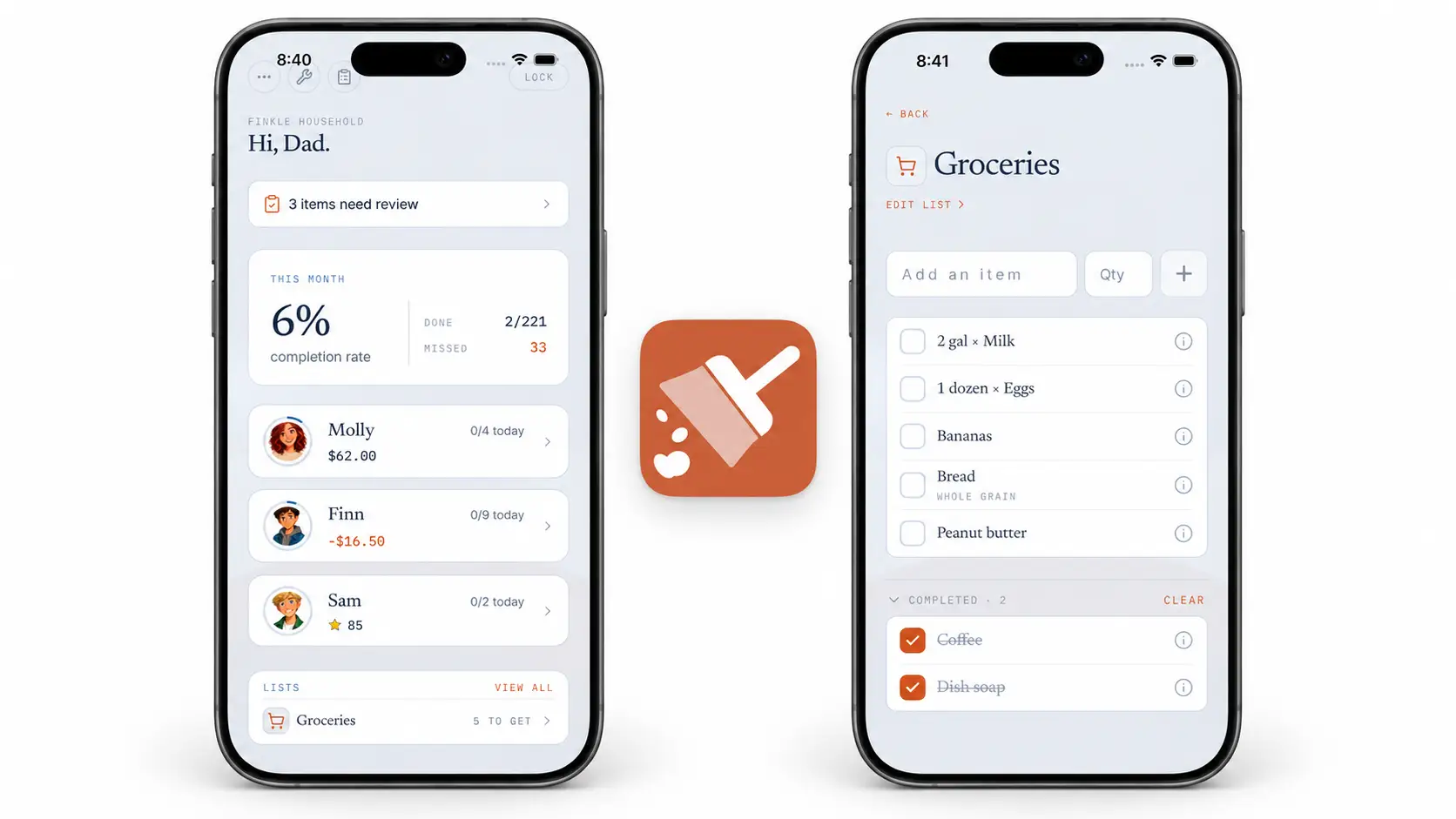
Xtra Hands lets parents schedule recurring and one-time chores, rotate shared jobs, use reminders, review completion, and request optional photo proof. Tweens can earn money, stars, or custom family rewards while unpaid responsibilities stay in the same household.
The system works across iOS and Android, which lets family members participate from different devices. One member receives every feature free with no trial deadline, so you can build and test the schedule before adding the household.
Frequently asked questions
What chores should a 9-year-old do?
Many nine-year-olds can unload safe dishwasher items, vacuum a room, fold and put away laundry, prepare a school lunch, take out safe trash, wipe counters, and manage basic pet care after instruction.
Can a 10-year-old do laundry?
A ten-year-old may be ready to sort, load, and fold laundry with supervision. Teach detergent measurement, machine settings, pocket checks, fabric exceptions, and what to do if the machine behaves unexpectedly.
What chores should an 11-year-old do?
An eleven-year-old may be ready to change sheets, run a full load of laundry, clean a bathroom, reset the kitchen, help cook a simple meal, handle yard work, and own a recurring household zone.
Can a 12-year-old cook dinner?
Many twelve-year-olds can prepare a simple practiced meal with adult supervision. Readiness depends on experience with knives, heat, food safety, timing, and responding calmly when something goes wrong.
How long should tween chores take?
A daily contribution may take ten to twenty minutes, while a weekly job may take longer. The right load leaves room for school, sleep, activities, rest, and family life.
Can a tween watch younger siblings?
An older tween may help briefly while an adult remains at home, depending on both children and the task. Being left in charge without an adult involves separate readiness, safety, and local-law considerations.
Final take
Ages nine through twelve are the bridge between helping and ownership. Teach complete processes, keep hazards under adult control, and give children enough time to become competent before switching their jobs. The goal is not more work for its own sake; it is a growing set of skills they can carry into adolescence.
Start free with Xtra Hands and organize chores, allowance, and rewards as your child's independence grows.