Chores for 6-8 Year Olds: 30 Age-Appropriate Jobs

Good chores for 6-8 year olds sit between "help an adult" and "own the whole job." Children in early elementary school can follow short checklists, remember familiar routines, and take real responsibility for personal belongings and shared spaces. They still need teaching, realistic standards, and supervision around hazards.
This guide includes 30 age-appropriate jobs, divided into chores for six-, seven-, and eight-year-olds. Use the ages as a starting point rather than a deadline. Experience, attention, coordination, and your home's setup matter as much as a birthday.
Quick list: chores for ages 6-8
Make the bed.
Set and clear the table.
Sort, fold, and put away simple laundry.
Sweep a small area.
Wipe tables and counters.
Empty small wastebaskets.
Feed and water a pet with supervision.
Pack a backpack or lunch.
Unload safe dishwasher items.
Vacuum a room.
Put away groceries.
Prepare a simple cold snack.
The American Academy of Pediatrics includes making beds, setting the table, sorting laundry, sweeping, watering plants, emptying wastebaskets, and filling a pet's food dish among appropriate jobs for ages five to seven. Its list expands around ages eight to ten to include vacuuming, helping with dinner, making snacks, putting away laundry, and storing groceries.
10 chores for 6-year-olds
At six, choose jobs with a visible result and only a few steps. A child may complete familiar work independently but still need reminders to begin and a quick check afterward.
Make a simple bed. Pull up the comforter and arrange one pillow.
Put dirty clothes in the hamper. Add checking the floor as the final step.
Sort clean laundry. Separate towels, socks, and each family member's clothing.
Fold washcloths and small towels. Accept imperfect edges while the skill develops.
Set napkins and utensils. Let an adult handle sharp knives or fragile dishes.
Clear their place after meals. Establish a safe destination for dishes.
Wipe the table. Use water or a child-safe method chosen by the adult.
Water indoor plants. Pre-measure water for plants that are easy to reach.
Put shoes, coat, and backpack away. Use hooks and storage at the child's height.
Do a five-minute toy and book reset. Give each category a clear home.
The goal at six is consistency, not volume. One dependable daily job and one weekly job are enough to begin.
10 chores for 7-year-olds
Many seven-year-olds can take ownership of familiar household routines. They may also be ready to notice when a job needs doing, but a schedule or visual cue still helps.
Sweep a kitchen or entryway. Demonstrate how to collect debris into one pile.
Empty bedroom and bathroom wastebaskets. An adult should check for unsafe contents first.
Put folded laundry away. Label or organize drawers so the destination is obvious.
Feed and water a pet. Use a measured scoop and supervise animal interactions.
Bring in mail. Confirm the route is safe from traffic and weather hazards.
Pack a backpack from a checklist. Include folders, homework, water, and activity items.
Help prepare a school lunch. Choose from parent-approved foods and portions.
Dust reachable furniture. Use a clean cloth without spray products.
Restock bathroom supplies. Replace towels, tissues, and toilet paper.
Help weed or rake. Define a small outdoor area and use child-appropriate tools.
The AAP's seven-year checkup guidance specifically names making the bed, choosing school clothes, and setting the table as appropriate responsibilities that can support accomplishment and confidence.
10 chores for 8-year-olds
At eight, children can begin completing more multi-step jobs after practice. Independence should grow gradually, especially around appliances, pets, food, and outdoor work.
Unload safe dishwasher items. Remove knives and fragile or heavy items first.
Vacuum one room. Teach cord, stair, and furniture safety.
Fold and put away a personal load of laundry. An adult can still run the machines.
Put away groceries. Assign pantry shelves and light refrigerator items.
Prepare a cold snack. Try fruit, cereal, yogurt, or a sandwich with safe tools.
Clean a sink and mirror. Provide the exact safe supplies and sequence.
Take recycling to the household bin. Check containers for sharp edges or broken glass.
Help with dinner preparation. Wash produce, measure ingredients, or mix away from heat.
Change a pillowcase and help strip the bed. Build toward changing all bedding later.
Organize one shelf or drawer. Define what stays, moves, or needs adult review.
The American Academy of Child and Adolescent Psychiatry suggests wiping tables and counters, putting away laundry, and sweeping for ages six to seven. Its suggestions for ages seven to nine add loading or unloading a dishwasher, meal preparation, and packing lunch.
Chores by room
Room | Good early elementary jobs |
|---|---|
Bedroom | Make bed, put away clothes, organize books, complete a short floor reset |
Kitchen | Set table, clear dishes, wipe table, unload safe items, help prepare food |
Laundry | Sort clothes, fold towels, match socks, carry and put away folded items |
Bathroom | Restock paper, replace towels, wipe sink and mirror with approved supplies |
Living room | Return books, fold blankets, dust, straighten cushions, vacuum |
Outdoors | Water plants, collect toys, pull easy weeds, rake a small area |
How many chores should a 6-8 year old have?
There is no required number. A practical starting point is:
One personal daily responsibility.
One short shared daily job.
One larger weekly chore.
For example, a seven-year-old might make the bed each morning, clear their dish after dinner, and fold towels on Saturday. Once the routine is dependable, add a new skill or increase independence.
Count time and difficulty, not just tasks. "Put shoes away" and "vacuum the living room" are not equal simply because each occupies one line.
Sample daily chore routine
Routine point | Example responsibility |
|---|---|
After getting dressed | Make bed and place clothes in hamper |
After school | Hang backpack, unpack lunchbox, and put shoes away |
Before dinner | Set napkins and utensils |
After dinner | Clear dish and wipe table |
Before bedtime routine | Complete a five-minute room reset |
This is an example, not a recommended requirement for every child. Select only the responsibilities your family needs and your child can manage.
Sample weekly chore schedule
Day | One weekly assignment |
|---|---|
Monday | Empty bedroom wastebasket |
Tuesday | Fold and put away towels |
Wednesday | Water indoor plants |
Thursday | Dust a shared room |
Friday | Clean out backpack |
Saturday | Vacuum bedroom or sweep entryway |
Sunday | Help prepare school clothes and lunch items |
You do not need a different chore every day. Many children do better owning the same job for several weeks. Our guide to creating a weekly chore schedule for kids explains fixed assignments, rotations, and routine anchors in more detail.
Teach the chore before expecting independence
Early elementary children can appear highly capable and still miss steps adults assume are obvious. Use a simple teaching progression:
Show the complete task. Explain the order and point out safety rules.
Do it together. Let the child perform the easier steps.
Let the child lead. Stay nearby and offer fewer prompts.
Check the agreed standard. Give specific feedback without redoing everything.
Write or photograph the steps. Use a checklist until the sequence becomes familiar.
"Clean the bathroom sink" might mean put away personal items, dampen the cloth, wipe the basin and faucet, rinse the cloth, and hang it to dry. A clear sequence turns an adult assumption into a learnable skill.
Safety boundaries for ages 6-8
Children this age still need adult judgment around household hazards. Keep them away from:
Concentrated cleaners, bleach, detergent pods, and unlabeled products.
Sharp knives, broken glass, and unsafe dishwasher items.
Hot burners, ovens, boiling water, and grease.
Heavy trash bags or containers with unknown contents.
Power tools, lawn mowers, and snow blowers.
Unsafe roads, driveways, heights, and unstable stools.
Unsupervised pet care when an animal may guard food or become unpredictable.
Readiness can vary by child and task. Demonstrate appliances and tools individually, and supervise until the child can respond correctly when something unexpected happens.
Should 6-8 year olds earn allowance?
This is a common age to begin a small allowance because children can count money, wait for a goal, and understand basic tradeoffs.
Families commonly choose one of three models:
Separate allowance: money is for financial practice, while chores are expected.
Pay for chores: completed work determines weekly earnings.
Hybrid: basic responsibilities are expected, while optional extra jobs earn money or stars.
There is no universal right answer. Be clear before the work begins. Our guide to allowance amounts by age offers practical starting ranges and payment schedules.
How to respond when your child resists chores
Resistance does not always mean the child is lazy. Check whether the job is clear, taught, manageable, and attached to a predictable time.
Reduce the assignment to one specific first step.
Offer a limited choice between two acceptable jobs or times.
Work beside the child for the first few minutes.
Use a short checklist instead of repeated verbal directions.
Connect completion to the next routine or privilege.
Notice effort and increasing independence.
Avoid turning every forgotten sock into a character judgment. Skills, routines, and follow-through improve through repetition. For more practical language, read How to Get Kids to Do Chores Without Nagging.
Use a chart or app without overcomplicating it
Children ages six to eight often benefit from an external reminder. Use a paper checklist when the routine is short and always happens in one place. Use an app when assignments repeat on different days, rotate between siblings, earn different rewards, or need parent approval.
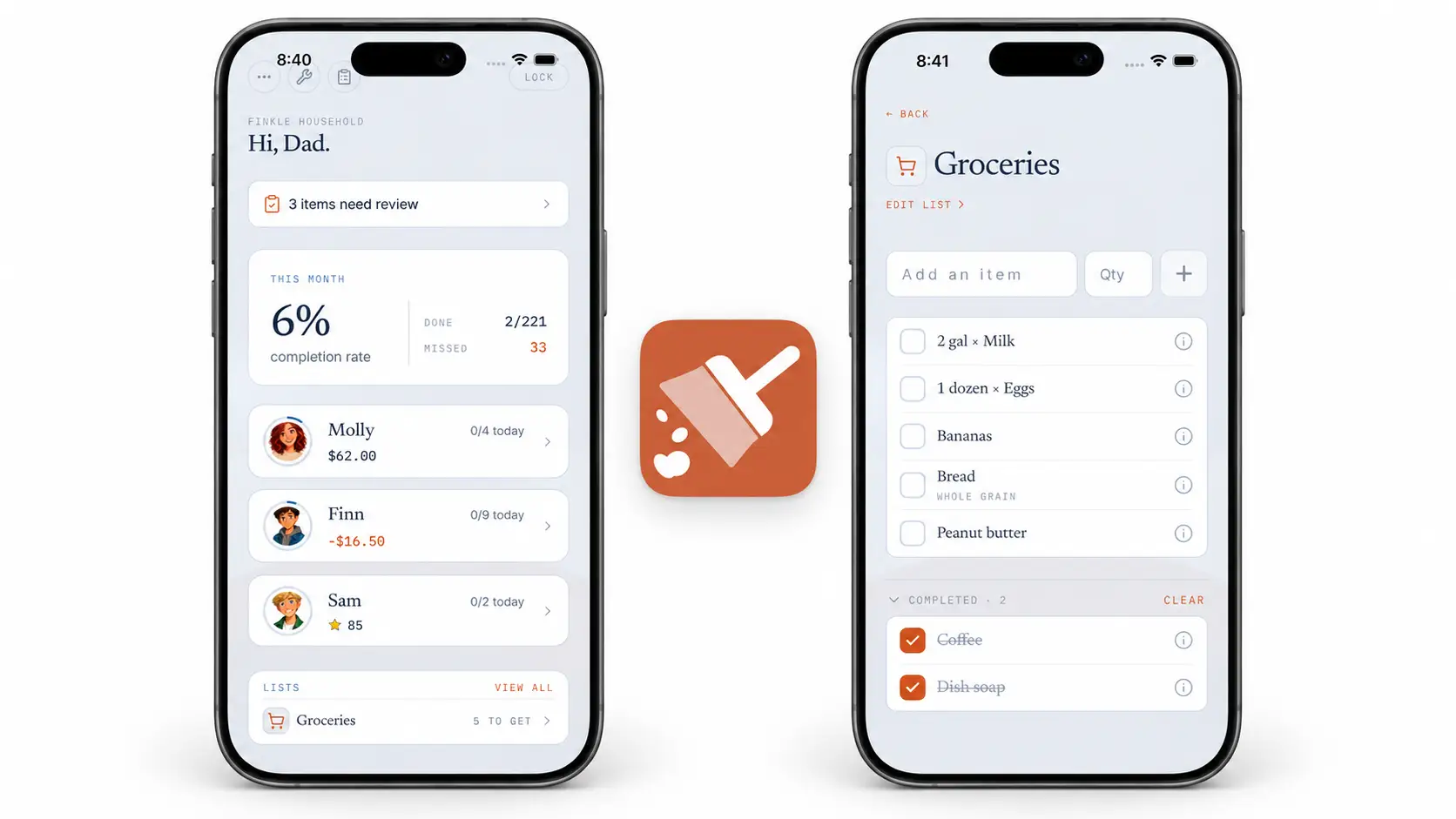
Xtra Hands lets families manage recurring chores, one-time jobs, reminders, approvals, optional photo proof, money, stars, and custom rewards. It works across iOS and Android, so family members can share one household even when they use different devices.
One member gets every feature free with no trial deadline. Start with a short list, practice it together, and invite the rest of the family after the routine makes sense.
Frequently asked questions
What chores should a 6-year-old do daily?
A six-year-old might make the bed, place clothes in the hamper, clear a dish, put away shoes and backpack, or complete a short toy reset. Start with one or two dependable jobs rather than assigning the whole list.
What chores can a 7-year-old do independently?
After practice, many seven-year-olds can put away laundry, set the table, sweep a small area, empty safe wastebaskets, pack a backpack from a checklist, or feed a pet using a measured portion.
Can an 8-year-old unload the dishwasher?
Many eight-year-olds can unload safe, reachable items after instruction. An adult should remove sharp knives, fragile glasses, heavy cookware, and anything stored where the child would need to climb.
How long should chores take at this age?
Most daily responsibilities should take only a few minutes. A larger weekly job may take ten to twenty minutes depending on the child and task. Define the finish line so the work does not feel endless.
Should siblings ages six and eight have the same chores?
Not necessarily. Fairness can reflect skill, safety, time, and difficulty. They may share some jobs while the older child handles an additional step or more complex responsibility.
What if my child cannot do a chore listed for their age?
Break the task into smaller steps, change the tools or setup, provide more supervision, or choose another responsibility. Age ranges describe common possibilities, not requirements every child must meet.
Final take
Children ages six to eight are ready for real contribution, but independence grows through teaching. Choose a small number of useful jobs, show exactly what finished looks like, keep safety decisions with the adult, and add responsibility as confidence develops.
Start free with Xtra Hands and build a chore routine that can grow alongside your child.