Chores for Toddlers: 30 Simple Jobs for Ages 2-5
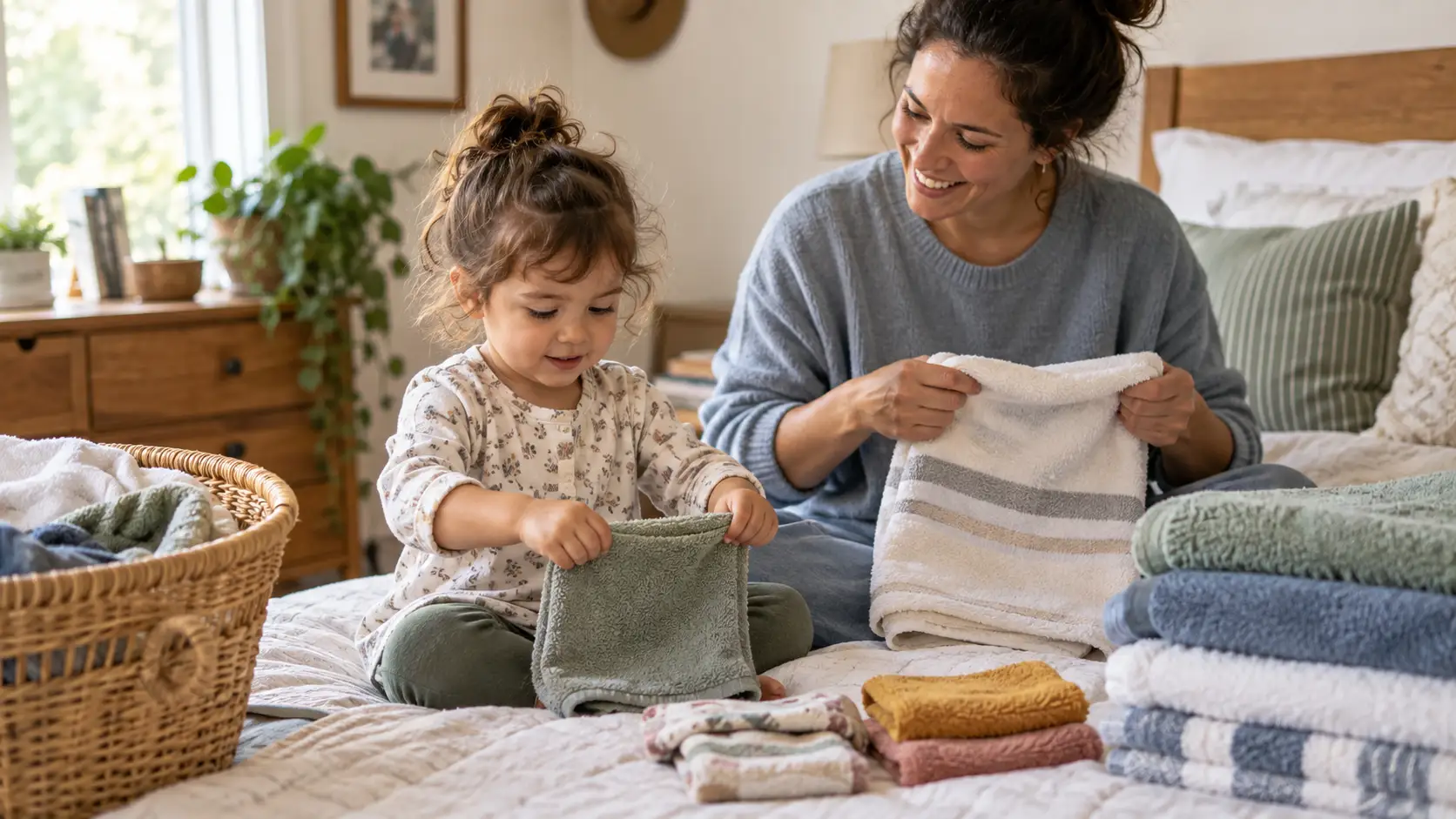
Chores for toddlers are not about getting the house cleaned faster. Anyone who has watched a two-year-old fold a towel knows that efficiency is not the point. The value is participation: a young child learning that they are capable, that everyday objects have places, and that everyone contributes to family life.
Children ages two through five can help with real household work when the task is safe, brief, and matched to their current skills. This guide includes 30 simple ideas organized by age, plus realistic expectations and a gentle seven-day plan for getting started.
Quick answer: the best toddler chores
Good first chores include putting toys in a bin, carrying clothes to a hamper, matching socks, wiping small spills, placing napkins on the table, watering plants, helping feed a pet, and carrying an unbreakable dish to the counter. Toddlers should work with adult supervision, one clear step at a time.
The American Academy of Child and Adolescent Psychiatry suggests that children ages two to three can put away toys and groceries and dress with help. By ages four to five, many can help feed pets, make their beds imperfectly, and clear the table.
What makes a chore appropriate for a toddler?
A toddler chore should meet five tests:
Safe: no toxic products, sharp tools, heat, heavy objects, or dangerous climbing.
Short: the child can participate before attention and energy run out.
Specific: the job has one clear action and an obvious finish.
Reachable: supplies and storage are accessible without unsafe furniture.
Real: the task makes a visible contribution, even if an adult finishes later.
"Put these blocks in the blue bin" is a toddler chore. "Clean the playroom" is an adult-sized project disguised as a sentence.
Chores for 2-year-olds
At two, children learn by copying. Most jobs are done beside an adult and may hold their attention for only a minute or two. Focus on moving one kind of object to one clear destination.
Put toys in a bin. Start with one category, such as blocks or stuffed animals.
Place dirty clothes in a hamper. Use a low, open basket the child can reach.
Carry a diaper to the trash. Keep the route safe and the bin accessible with help.
Return board books to a low shelf. Model placing rather than throwing.
Wipe a small spill. Hand over a dry or water-dampened cloth.
Carry an unbreakable cup to the counter. Begin with an empty cup and stay nearby.
Put shoes by the door. Mark a simple, consistent location.
Expect participation, not independent completion. A two-year-old may put away six blocks and wander off. Thank them for the six, finish together, and try again during the next routine.
Chores for 3-year-olds
Many three-year-olds can follow one-step directions consistently and begin simple two-step tasks with help. Repetition matters more than variety.
Match clean socks. Begin with pairs that look noticeably different.
Put folded washcloths in a drawer. Use a low drawer that cannot tip.
Place napkins on the table. Count one for each seat together.
Dust low surfaces. Use a clean microfiber cloth with no spray.
Water one plant. Pre-measure the water in a small, light container.
Help fill a pet bowl. An adult should measure and supervise food and animal interaction.
Sort laundry by simple categories. Try lights and darks, or towels and clothes.
Put groceries on a low shelf. Choose light, unbreakable packages.
Three-year-olds often want to repeat jobs adults consider boring. Let that enthusiasm work for you. The same small task every day builds more confidence than a constantly changing chart.
Chores for 4-year-olds
At four, children can often remember short sequences and take ownership of a familiar job. They still need supervision and may need a picture or demonstration for each step.
Pull up the bedcover. Skip decorative pillows and adult standards.
Clear an unbreakable plate and cup. Choose a stable destination away from sharp utensils.
Set napkins and spoons. Add more table items as coordination improves.
Help prepare a cold snack. Wash fruit, place crackers on a plate, or spread with a child-safe utensil.
Use a small broom and dustpan. Work on one visible pile rather than an entire room.
Hang a coat on a low hook. Make the storage fit the child's height.
Restock toilet paper. Carry one or two rolls to the bathroom.
Help pack a preschool bag. Follow a two- or three-picture checklist.
A four-year-old may understand the assignment but become distracted halfway through. A calm cue such as "What comes next?" gives the child a chance to recover the sequence without taking over.
Chores for 5-year-olds
Five-year-olds are entering a stage where a tiny daily responsibility can become truly dependable. Keep expectations concrete and continue teaching anything new before assigning it independently.
Make a simple bed. Straighten the pillow and pull up one blanket or comforter.
Set and clear basic table items. Keep breakable or sharp objects with an adult.
Fold towels and washcloths. Accept uneven edges.
Sort clean utensils. Remove sharp knives and supervise the drawer.
Help empty a small wastebasket. An adult should check for unsafe contents first.
Wash plastic dishes in a basin. Use lukewarm water and close supervision.
Do a five-minute bedroom reset. Use a short picture checklist for clothes, books, and toys.
For chores beyond the preschool years, see our complete guide to age-appropriate chores for kids.
Toddler chores by room
Room | Simple ways to help |
|---|---|
Bedroom | Put clothes in hamper, return books, place toys in bins, pull up blanket |
Kitchen | Set napkins, carry plastic dishes, wipe table with water, put away light groceries |
Laundry area | Match socks, sort colors, carry washcloths, place clothes in basket |
Living room | Return cushions, collect books, dust low surfaces, put blankets in basket |
Entryway | Put shoes in place, hang coat on low hook, carry hat to basket |
Outdoors | Water one plant, collect safe yard toys, carry a small empty pot |
Chores toddlers should not do
Toddlers do not understand risk reliably. An adult must control the environment, not rely on a warning the child may forget.
Keep young children away from:
Household cleaning products, detergent pods, and disinfectants.
Knives, peelers, graters, broken glass, and sharp utensils.
Stoves, ovens, hot pans, boiling water, and heated appliances.
Heavy trash bags or waste that may contain unsafe objects.
Standing on chairs, counters, unstable stools, or furniture.
Power tools, lawn equipment, and electrical cords.
Unsupervised care of pets, especially around food.
Water-filled buckets, bathtubs, pools, or other drowning hazards.
Child-sized tools can make participation easier, but "child-sized" does not automatically mean safe. Inspect each item, supervise its use, and store it appropriately.
How to teach a toddler a new chore
Young children learn more from seeing and doing than from a long explanation.
Get close and name one action. Say, "Socks go in this basket."
Show it slowly. Complete one example while the child watches.
Do the next one together. Guide only as much as needed.
Let the child try. Wait before correcting.
Name the useful result. Say, "Now we can find the clean socks."
Avoid redoing the chore in front of the child unless safety or hygiene requires it. Constant correction teaches that their contribution does not count.
Use fewer words and clearer directions
Toddler-friendly instructions are short, concrete, and positive:
Instead of | Try |
|---|---|
Clean this whole mess | Put the blocks in this bin |
Be careful | Carry the cup with two hands |
Stop throwing everything around | Place the books on the shelf |
Help me with laundry | Find the matching socks |
Go get ready | Put your shoes by the door |
Give the next direction after the first is complete. A list of five spoken steps will often disappear before a toddler finishes step one.
How long should toddler chores take?
Most early chores should take a few minutes or less. The child may continue longer when interested, but the job should not depend on sustained attention.
Age two: one tiny action or one to two minutes together.
Age three: one familiar task lasting a few minutes.
Age four: a short two- or three-step job with reminders.
Age five: a familiar daily job plus occasional help on a larger task.
Stop before the chore becomes an endurance test. Short, successful repetition builds more willingness than a long session ending in a power struggle.
A seven-day toddler chore starter routine
Do not introduce all 30 ideas at once. Choose one dependable task and practice it in the same part of the day.
Day | What to do |
|---|---|
Day 1 | Choose one chore and arrange the space so the child can succeed. |
Day 2 | Demonstrate the chore and complete it together. |
Day 3 | Use the same words at the same routine point. |
Day 4 | Pause and let the child perform more of the job. |
Day 5 | Add a picture cue, song, or short game if starting is difficult. |
Day 6 | Notice the contribution with specific praise. |
Day 7 | Repeat the routine and decide whether to keep practicing before adding another job. |
The American Academy of Pediatrics encourages families to start early, build a culture of teamwork, and praise effort instead of demanding perfection. Small accomplishments can lead to larger responsibilities as children mature.
Should toddlers use a chore chart?
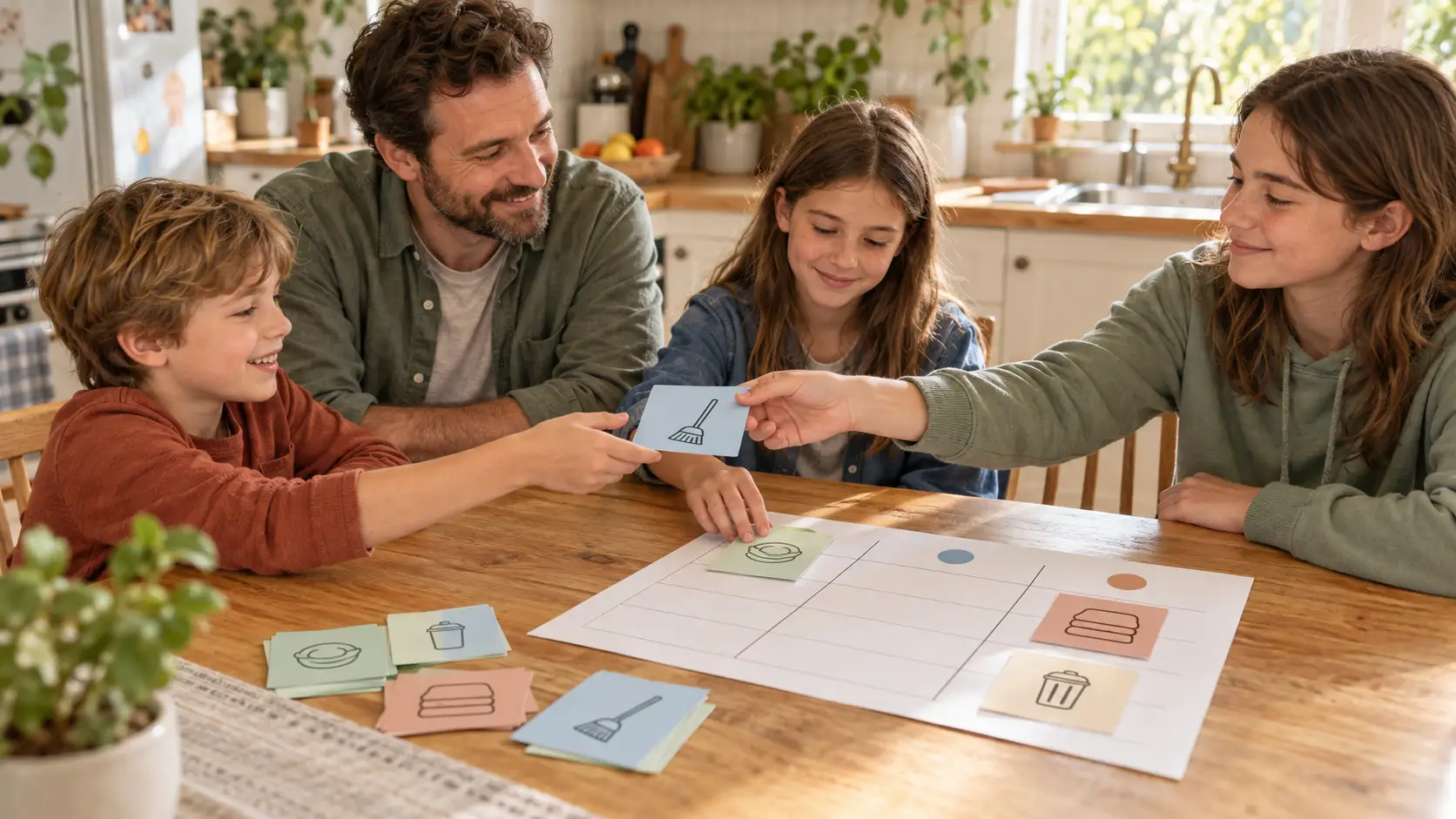
A chart is optional. A toddler who always puts pajamas in the hamper after getting dressed may need only the routine cue. A simple visual can help when the child is learning several steps or enjoys marking completion.
For young children:
Use one recognizable picture per chore.
Show only the current routine, not the entire week.
Limit the chart to one or two jobs.
Let the child place a sticker or make the completion mark.
Keep the chart where the chore happens.
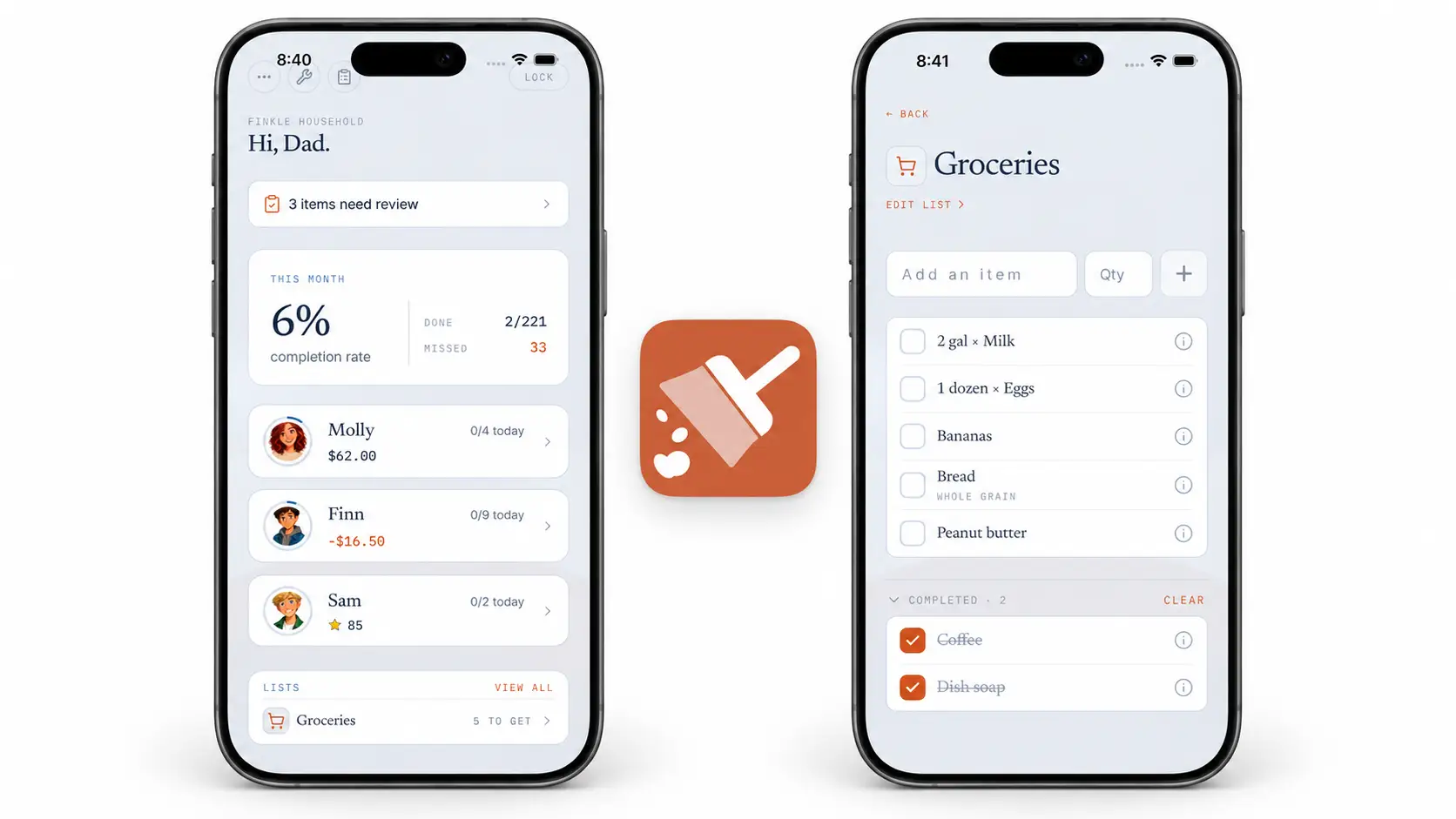
A shared device can also hold the household record while a picture cue stays visible near the routine. Xtra Hands supports stars, custom rewards, repeating chores, and parent approval, and family members can participate across iOS and Android. A toddler does not need a personal phone.
Should toddlers earn rewards for chores?
Toddlers often respond well to immediate attention, a high five, choosing the cleanup song, or placing a sticker. Expensive rewards and complicated point systems are unnecessary.
Use specific acknowledgment: "You put every book on the shelf, so now we can find them for story time." This helps the child connect effort to a meaningful result.
If you use a reward, keep it small, prompt, and understandable. Our guide on building a chore reward system explains how rewards can support a routine without becoming a bribe for every expected action.
What to do when a toddler refuses
Refusal is normal. A toddler may be hungry, tired, absorbed in play, confused by the task, or testing what happens next.
Make the direction smaller: "Put in one block."
Offer a limited choice: "Books first or blocks first?"
Begin together: "You hold the basket, and I will pick up the first toy."
Use a transition warning before cleanup.
Stay calm and finish the routine without a long lecture.
Do not turn a minor cleanup into a test of character. The goal is repeated practice across months and years, not winning one showdown before dinner.
Frequently asked questions
Can a two-year-old really have chores?
Yes, if "chore" means a tiny, supervised contribution such as putting toys in a bin or clothes in a hamper. A two-year-old is practicing participation, not taking independent responsibility for household upkeep.
What is the easiest first chore for a toddler?
Choose a task already connected to the child's routine. Putting bath clothes in a hamper, returning books after story time, or placing toys in one open bin are easy starting points.
How many chores should a toddler have?
Begin with one dependable task. Add a second only after the first feels familiar. Toddlers may help with many activities alongside an adult without having a long list of assigned responsibilities.
What if my toddler makes more mess while helping?
Choose lower-stakes jobs, pre-measure materials, reduce the amount involved, and expect the process to take longer. A few spilled drops while learning to water a plant are different from giving a child a full container that creates an avoidable flood.
Are chores punishment?
Routine household chores should not be framed as punishment. They are ordinary ways family members care for themselves and shared spaces. A child may help repair a mess they created, but chores should not become synonymous with being in trouble.
Does my toddler need a reward every time?
No. Warm attention, specific praise, a completion mark, or enjoying the result may be enough. Rewards can be useful, but not every contribution needs payment or a prize.
Final take
The best chores for toddlers are small, real, and safe. Start with one action your child can practice beside you, accept an imperfect result, and repeat it until helping feels like a normal part of the day. You are not training a tiny housekeeper. You are giving a young child an early experience of competence and belonging.
Start free with Xtra Hands and create a simple chore routine that can grow with your child.